


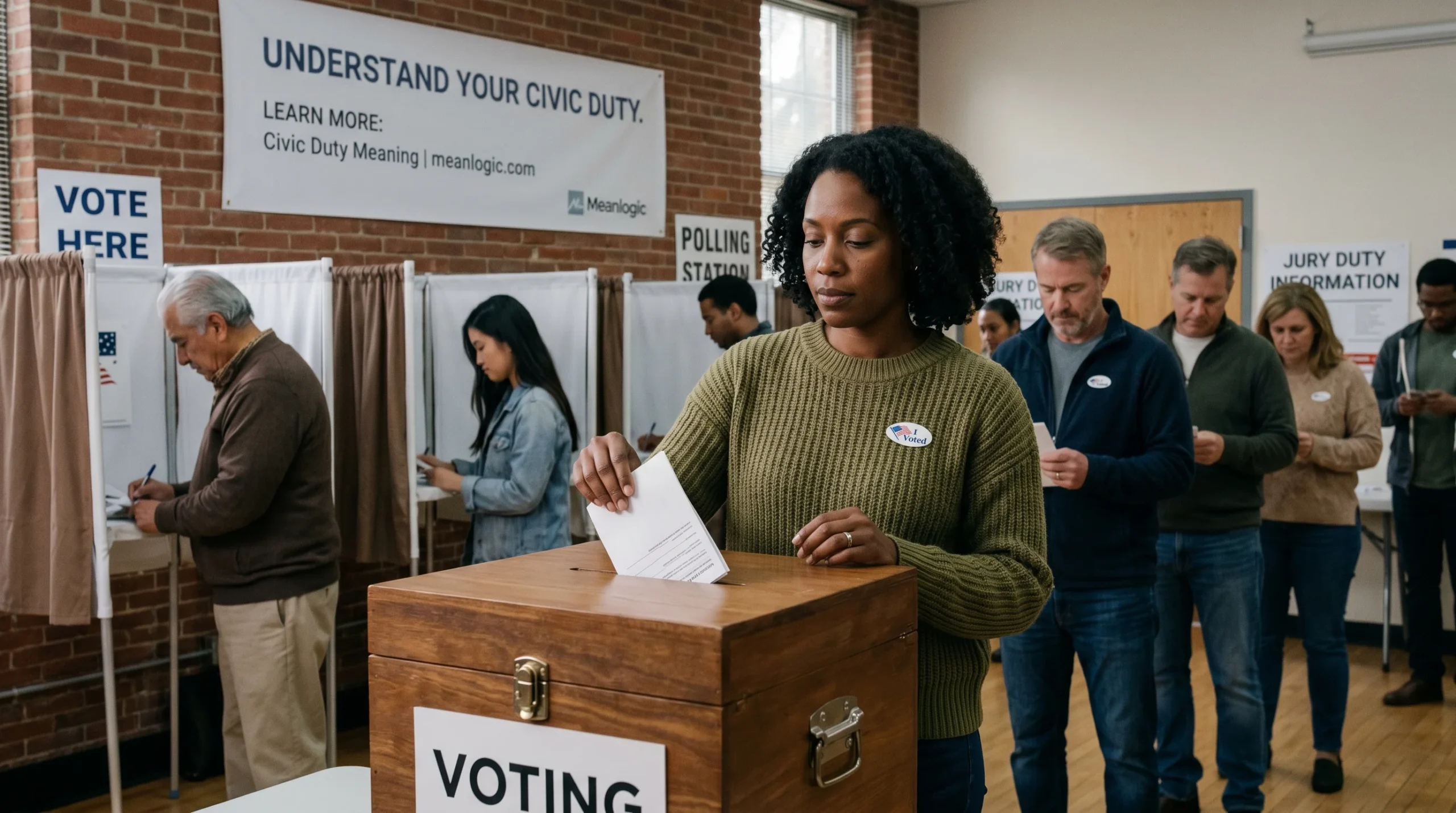
You may have heard teachers, news anchors, or social media posts say, “It’s your civic duty.” But what does that actually mean? Many people find this term confusing because it sounds formal and serious, yet it affects everyday life more than we realize.
Understanding civic duty meaning is important because it explains the role every citizen plays in keeping society fair, safe, and functional. From voting to following laws and helping the community, civic duty shapes how countries and communities work together.
This article explains civic duty meaning in simple English, using real-life examples and modern explanations. It is fully updated for 2026 and written to help beginners clearly understand the term.

Civic Duty Examples
A civic duty is a responsibility that citizens are expected to perform to help their community, society, or country function effectively.
Common examples of civic duties include:
- Voting in elections
- Obeying laws
- Paying taxes
- Serving on a jury (where applicable)
- Respecting the rights of others
- Staying informed about public issues
- Participating in community service
- Following public regulations
These actions contribute to the well-being and stability of society.
Civic Duty Meaning in English
In English, civic duty refers to a citizen’s moral or social responsibility toward their community, city, state, or country.
Definition:
Civic duty is an action or responsibility that helps support and improve society and public life.
The term combines:
- Civic = Related to citizenship or community
- Duty = Responsibility or obligation
Example:
- “Helping keep the community clean is a civic duty.”
Civic Duty Meaning for Students
For students, civic duty means acting responsibly and contributing positively to school and society.
Examples for students include:
- Following school rules
- Respecting teachers and classmates
- Participating in community projects
- Learning about citizenship
- Protecting public property
- Helping others
Understanding civic duty helps students become responsible and engaged citizens.
Is Voting a Civic Duty?
Yes, voting is widely considered a civic duty in many democratic countries.
Voting allows citizens to:
- Choose leaders
- Influence government policies
- Participate in democracy
- Express their opinions on public issues
Although voting may be legally optional in many countries, it is often viewed as an important civic responsibility.
Civic Duty Meaning Voting
When people refer to voting as a civic duty, they mean that citizens have a responsibility to participate in the democratic process.
Voting helps:
- Represent public interests
- Strengthen democracy
- Hold leaders accountable
- Shape future policies
Example:
- “Many people believe that voting is both a right and a civic duty.”
Civic Duty Synonym
Common synonyms and related terms for civic duty include:
- Civic responsibility
- Public responsibility
- Citizen obligation
- Social responsibility
- Community duty
- Public service
- Citizenship responsibility
While these terms are similar, the exact meaning may vary depending on the context.
Civic Duty Sentence
Examples of civic duty in a sentence:
- “Voting in elections is an important civic duty.”
- “Paying taxes is considered a civic duty in many countries.”
- “Students learn about civic duty through community service projects.”
- “Respecting the law is part of every citizen’s civic duty.”
- “She believes helping others is a civic duty.”
These examples show how the term is used in everyday English.
Civil Duty or Civic Duty
Civic duty and civil duty are often confused, but they are not exactly the same.
| Term | Meaning |
|---|---|
| Civic Duty | Responsibilities related to citizenship and community participation |
| Civil Duty | Duties related to civil law, legal matters, or formal obligations |
In most discussions about voting, citizenship, and community involvement, civic duty is the correct term.
Example:
- ✅ “Voting is a civic duty.”
- ❌ “Voting is a civil duty.” (less common and usually not preferred)
Summary
Civic duty refers to the responsibilities citizens have toward their community and country. Examples include voting, obeying laws, paying taxes, and participating in community activities. Students learn civic duties to become responsible citizens, and voting is widely regarded as one of the most important civic duties in a democracy.

What Does “Civic Duty Meaning” Mean in Chat or Text?
Clear Definition
- Civic duty refers to the responsibility of citizens to participate in their community and country.
- Includes activities that benefit society, like voting, following laws, or volunteering.
- It’s about active citizenship—not just rights, but responsibilities.
Different Meanings Based on Context
- Legal Context: Obeying laws, paying taxes, jury duty.
- Social Context: Volunteering, helping neighbors, or participating in local projects.
- Political Context: Voting, attending town halls, engaging in civic discussions.
Brief History & Online Chat Relevance
- The term comes from ancient democracies, where citizens were expected to contribute to society.
- In modern chats or social media, it often appears in discussions about voting, community service, or political engagement.
- Seen in forums, educational discussions, and civic awareness campaigns.

How People Use “Civic Duty Meaning” in Real Conversations
Platforms
- Texting: Discussing elections, volunteering plans.
- Social Media: Instagram, Twitter, TikTok for civic campaigns.
- Forums & Discord: Community advice, local activism.
- Educational Apps & Chats: School projects, civics lessons.
When It’s Appropriate vs Awkward
Appropriate:
- Talking about voting or jury duty
- Encouraging volunteer work
- Sharing civic news or awareness campaigns
Awkward:
- Using the term for casual personal favors (“Helping my friend move is my civic duty”)
- Overusing it in memes or jokes about politics
- Confusing it with general kindness without societal impact
Casual Explanations with Personal-Style Insights
- “Don’t forget, it’s your civic duty to vote this weekend.”
- “Volunteering at the local shelter is just part of our civic duty.”
- Works naturally in conversations about community responsibility and awareness.
Real-Life Examples of “Civic Duty Meaning” in Text Messages
Here are realistic chat-style examples showing how the term is used, along with explanations.
Example 1:
Text: “I’m going to vote today—it’s my civic duty.”
Meaning: The person feels responsible for participating in elections.
Example 2:
Text: “Paying taxes is a civic duty, whether people like it or not.”
Meaning: Taxes are seen as a responsibility of citizenship.
Example 3:
Text: “Volunteering during floods is a civic duty.”
Meaning: Helping the community is part of being a responsible citizen.
Example 4:
Text: “Spreading fake news goes against civic duty.”
Meaning: Responsible online behavior is also part of civic responsibility.
These examples show that civic duty meaning in text focuses on responsibility and contribution.
Common Mistakes & Misunderstandings
Many people misunderstand civic duty. Here are the most common errors.
Thinking civic duty only means voting
Voting is important, but civic duty includes many responsibilities, such as obeying laws and helping the community.
Believing civic duty is always optional
Some civic duties are legal obligations, like paying taxes or jury service.
Confusing civic duty with personal opinion
Civic duty is about responsibility, not personal beliefs.
Assuming civic duty is outdated
In 2026, civic duty also includes digital behavior, such as responsible sharing and respectful communication.
Related Slangs & Abbreviations
These related terms are often connected with civic duty and work well for internal linking.
Related terms
Citizenship – Legal status of being a citizen
Civic responsibility – Ethical side of civic duty
Public service – Work done for community benefit
Social responsibility – Duty toward society at large
Community service – Voluntary civic involvement
Understanding these helps deepen the meaning of civic duty.
FAQs
What does civic duty mean in simple words?
Civic duty means the responsibilities citizens have to support society and follow rules.
Is civic duty required by law?
Some civic duties are legally required, while others are moral responsibilities.
Why is civic duty important?
It helps maintain order, fairness, and cooperation in society.
Is civic duty only about government?
No. It also includes community involvement and respectful behavior.
Does civic duty apply online?
Yes. Responsible online behavior is part of modern civic duty.
Conclusion
Understanding civic duty meaning helps you recognize your role in society beyond personal interests. Civic duty is not limited to laws or government actions—it includes everyday behaviors that promote fairness, safety, and cooperation. From voting and following rules to helping others and behaving responsibly online, civic duty connects individual actions to the well-being of the entire community.
Civic duty does not demand perfection. Instead, it encourages awareness, responsibility, and respect for others. Even small actions—when done consistently—can create meaningful change. In today’s digital world, civic duty also includes how we communicate, share information, and treat others online.
When citizens understand and practice civic duty, societies become stronger, more stable, and more united. Knowing this concept empowers individuals to act responsibly and contribute positively to their communities.
