
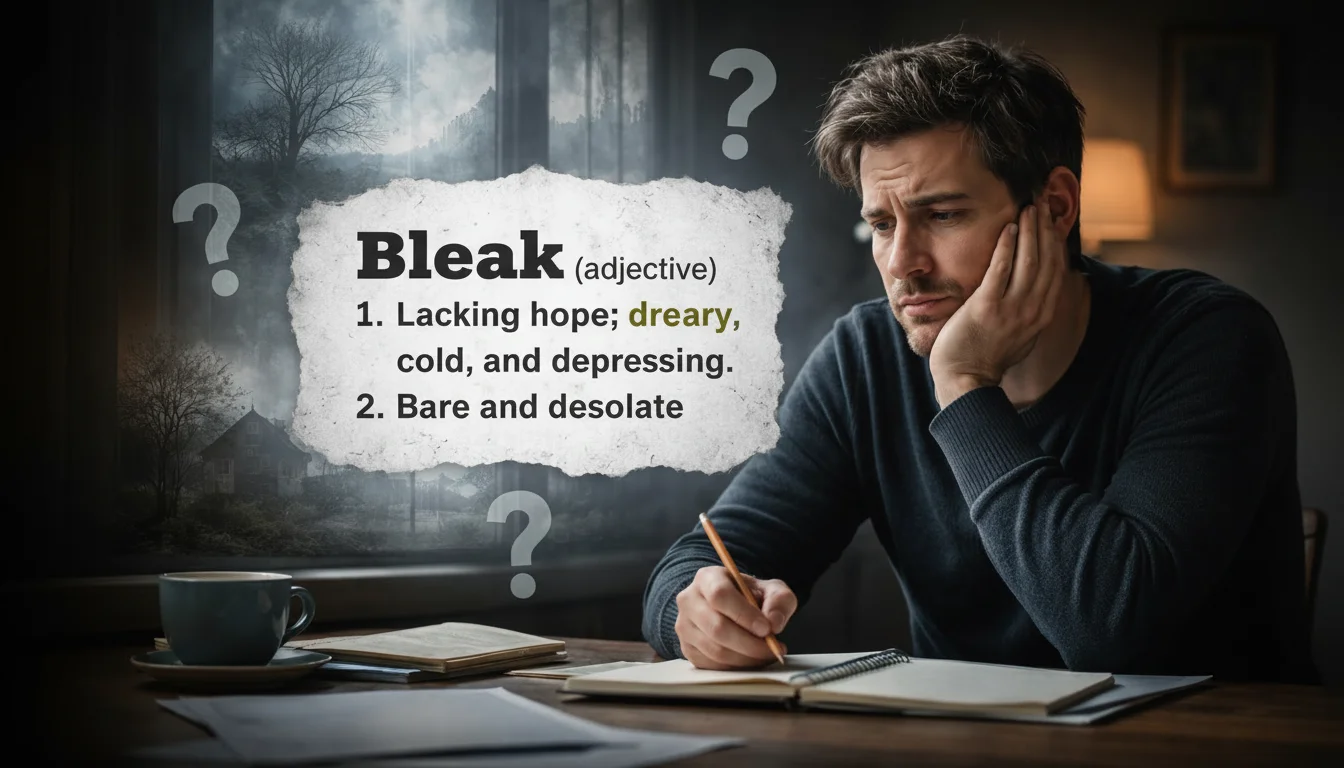
Bleak Meaning

Bleak Meaning: 8 Powerful Facts, Synonyms & Common Phrase Meanings

You may have heard someone say, “The future looks bleak,” or read a sentence that felt cold, empty, or hopeless. That’s usually when people start searching for the bleak meaning.

The word bleak is short, but emotionally heavy. It’s used in news, books, conversations, and even online posts to describe situations that feel negative, empty, or without hope. Understanding the bleak meaning helps you better understand tone, emotions, and seriousness in modern language.

This guide explains the bleak meaning in the simplest way possible, with real-life examples and modern usage, fully updated for 2026.

Bleak Meaning in English

Bleak is an adjective used to describe something that appears gloomy, depressing, hopeless, cold, or lacking in positivity. The word can refer to physical environments, emotional situations, or future prospects that seem unpleasant or discouraging.

Common meanings of bleak include:

  • Dark and depressing
  • Without hope or encouragement
  • Cold, bare, and unwelcoming
  • Unlikely to improve

Examples:

  • “The town looked bleak after the storm.”
  • “The economic outlook is bleak.”
  • “She faced a bleak future after losing her job.”

The word is often used when discussing difficult situations, negative forecasts, or emotionally challenging circumstances.


Bleak Synonym

Several words can be used as synonyms for bleak, depending on the context.

Common synonyms include:

  • Gloomy
  • Dreary
  • Dismal
  • Hopeless
  • Depressing
  • Grim
  • Miserable
  • Desolate
  • Unpromising
  • Cheerless

Examples:

  • “The future looks bleak.” → “The future looks grim.”
  • “The weather was bleak.” → “The weather was gloomy.”

While these words have similar meanings, bleak often emphasizes a lack of hope or positivity.


Bleak Meaning in Farsi

In Farsi (Persian), bleak can be translated as:

  • غم‌انگیز (Ghamangiz) – Sad or depressing
  • تاریک و ناامیدکننده (Tarik va Naomidkonandeh) – Dark and discouraging
  • دلگیر (Delgir) – Gloomy
  • ناامیدکننده (Naomidkonandeh) – Hopeless

Examples:

  • “The future seems bleak.”
  • آینده ناامیدکننده به نظر می‌رسد.

The exact translation depends on whether the word describes weather, emotions, or life circumstances.


Bleak Meaning Person

When used to describe a person, bleak usually refers to someone who appears pessimistic, emotionally withdrawn, discouraged, or lacking hope.

Examples:

  • “He gave a bleak assessment of the situation.”
  • “Her bleak expression suggested she was worried.”

A bleak person may:

  • Expect negative outcomes
  • Appear sad or discouraged
  • Show little optimism
  • Speak in a pessimistic manner

However, the word more commonly describes situations, outlooks, or environments rather than a person’s personality.


Bleek or Bleak Meaning

Many people confuse bleek and bleak because they sound similar.

Bleak

Bleak is the correct English word.

Meaning:

  • Gloomy
  • Hopeless
  • Depressing
  • Unpromising

Example:

  • “The outlook appears bleak.”

Bleek

Bleek is generally not a standard English word. It may appear as:

  • A surname
  • A brand name
  • A misspelling of “bleak”

In standard English usage, the correct word is bleak.


Bleak Meaning in Arabic

In Arabic, bleak can be translated as:

  • كئيب (Ka’eeb) – Gloomy
  • قاتم (Qatim) – Dark or bleak
  • محبط (Muhbit) – Discouraging
  • ميؤوس منه (May’oos Minhu) – Hopeless

Examples:

  • “The future looks bleak.”
  • يبدو المستقبل كئيبًا.
  • “The chances are bleak.”
  • الفرص تبدو ضئيلة وغير مشجعة.

The translation may vary depending on the specific context.


Future Is Bleak Meaning

The phrase “the future is bleak” means that the future appears difficult, uncertain, or lacking positive prospects.

When someone says the future is bleak, they usually believe that:

  • Conditions may worsen
  • Success seems unlikely
  • There is little reason for optimism
  • Challenges lie ahead

Examples:

  • “Without major changes, the future is bleak.”
  • “The company faces a bleak future due to declining sales.”

This phrase is commonly used in discussions about careers, finances, business, economics, health, and global issues.


Chances Are Bleak Meaning

The expression “chances are bleak” means that the likelihood of success or a positive outcome is very low.

It suggests that:

  • Success is unlikely
  • The odds are poor
  • The situation is unfavorable
  • There is little hope of achieving the desired result

Examples:

  • “Without additional funding, the chances are bleak.”
  • “His chances of winning are bleak.”

In everyday conversation, this phrase is often used to communicate pessimism about an outcome or opportunity.


Summary

Bleak is an English adjective meaning gloomy, depressing, hopeless, or unpromising. It is commonly used to describe difficult situations, negative forecasts, harsh environments, or low chances of success. Phrases such as “the future is bleak” and “chances are bleak” indicate a lack of optimism and suggest that positive outcomes are unlikely.

What Does “Bleak Meaning” Mean in Chat or Text?

Clear Definition

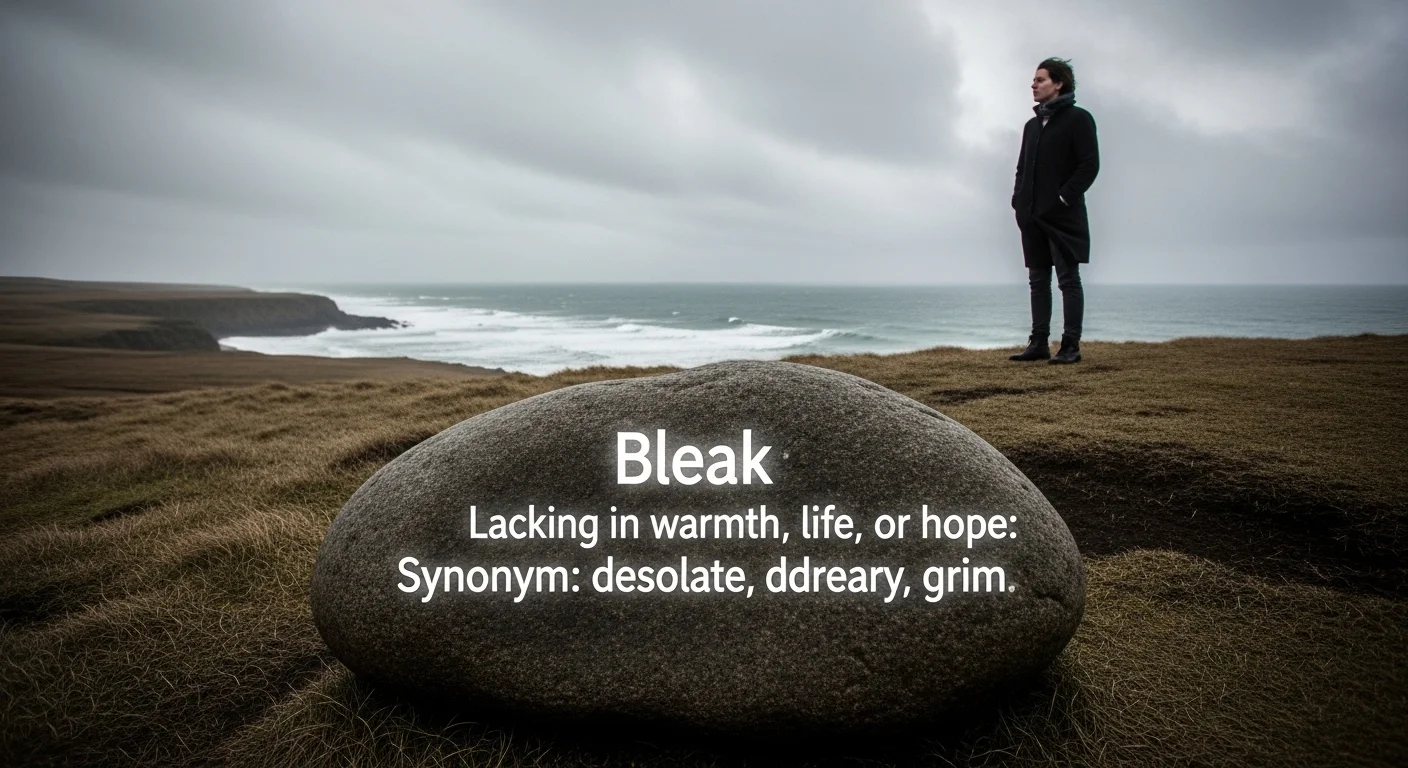
Bleak refers to something cold, dreary, depressing, or without hope. It describes situations, places, or moods that feel harsh, empty, or discouraging. Bleak can be used literally, to describe a landscape or weather, or figuratively, to describe emotions, outcomes, or prospects.

Different Meanings Based on Context

  • Weather / Landscape Context:
    Describes a cold, barren, or desolate environment.
    Example: “The bleak winter landscape stretched for miles.”
  • Emotional / Personal Context:
    Refers to feelings of hopelessness, sadness, or discouragement.
    Example: “After hearing the news, he felt a bleak sense of despair.”
  • Future / Outlook Context:
    Describes a situation or prospect that seems grim or unpromising.
    Example: “The company’s financial outlook looks bleak.”
  • Literary / Artistic Context:
    Used to convey dark, harsh, or stark imagery in writing, films, or art.
    Example: “The novel paints a bleak picture of society.”

Brief History

The word bleak comes from Old English blāc, meaning pale, shining, or white. Over time, its meaning shifted to cold, barren, and desolate landscapes or moods. Today, in 2026, the term is widely used in literature, news, social media, and everyday speech to describe grim situations, harsh environments, or negative emotions.
Bleak Meaning

How People Use “Bleak Meaning” in Real Conversations

Platforms:

  • Texting / WhatsApp / Messenger:
    Friend: “The forecast looks bleak for our weekend plans.”
    Used to describe disappointing or discouraging situations.
  • Instagram / TikTok:
    Caption: “Feeling bleak after finishing that exam.”
    Used to share moods or emotions with followers.
  • Workplace / Professional Setting:
    “The project’s progress looks bleak.”
    Used to describe challenges or poor prospects.
  • Literary / Media Discussions:
    “The film’s setting is bleak but beautifully shot.”
    Used when analyzing art, writing, or storytelling.
  • Casual / Social Usage:
    “It’s a bleak day outside — nothing to do.”
    Used to describe weather, feelings, or boring situations.

When It’s Appropriate vs Awkward

  • Appropriate:
    • Describing weather, moods, or negative situations
    • Discussing art, literature, or media with dark or serious tones
    • Talking about challenges or grim prospects
  • Awkward:
    • Using it lightly to describe trivial or fun events
    • Confusing it with cold physically rather than emotionally or atmospherically
    • Overusing it in casual, upbeat conversations

Casual Explanation with Personal-Style Insights

Think of bleak as a word for harsh, gloomy, or discouraging situations. Whether it’s the weather, a mood, or a challenging situation, bleak communicates a sense of emptiness or hopelessness.

In social media or chats, saying “feeling bleak” can be a dramatic way to express boredom, sadness, or frustration, while in writing, it adds depth and stark imagery.

Real-Life Examples of “Bleak Meaning” in Text Messages

Example 1:

“The job market looks bleak right now.”
Explanation: Opportunities seem limited and discouraging.

Example 2:

“After the accident, his future felt bleak.”
Explanation: He felt hopeless about what comes next.

Example 3:

“The movie shows a bleak world with no hope.”
Explanation: The setting is dark and depressing.

Example 4:

“She stared out at the bleak winter sky.”
Explanation: The environment feels cold and lifeless.

Example 5:

“Things seemed bleak, but they didn’t give up.”
Explanation: The situation was bad, but hope still existed.

Common Mistakes & Misunderstandings

Thinking Bleak Means Angry

Bleak is about hopelessness, not anger.

Confusing Bleak With Sad

Sad can be temporary.
Bleak suggests long-term negativity.

Overusing the Word

Using bleak too often can make writing sound overly negative.

Using It in Light Situations

Saying something small is bleak can sound dramatic or confusing.

Related Words & Similar Meanings

If you understand the bleak meaning, these related words often appear nearby:

  • Hopeless – No expectation of improvement

  • Grim – Serious and depressing

  • Desolate – Empty or abandoned

  • Dark – Emotionally negative

  • Dismal – Very poor or disappointing

These are strong internal linking opportunities for meaning-based content.

FAQs

What does bleak mean in simple words?

It means hopeless, depressing, or without positivity.

Is bleak always negative?

Yes, it almost always carries a negative tone.

Can bleak describe emotions?

Yes, it’s often used to describe emotional states.

Is bleak used in daily conversation?

Yes, especially in serious or emotional contexts.

Is bleak still commonly used in 2026?

Yes, it remains popular in news, writing, and speech.

Conclusion

The bleak meaning describes situations, emotions, or futures that feel empty, hopeless, or deeply negative. It’s a powerful word that adds seriousness and emotional depth to language.

Understanding the bleak meaning helps you read between the lines, understand tone, and use the word correctly without sounding dramatic or confusing.

Scroll to Top