

Estrogen Meaning in Female
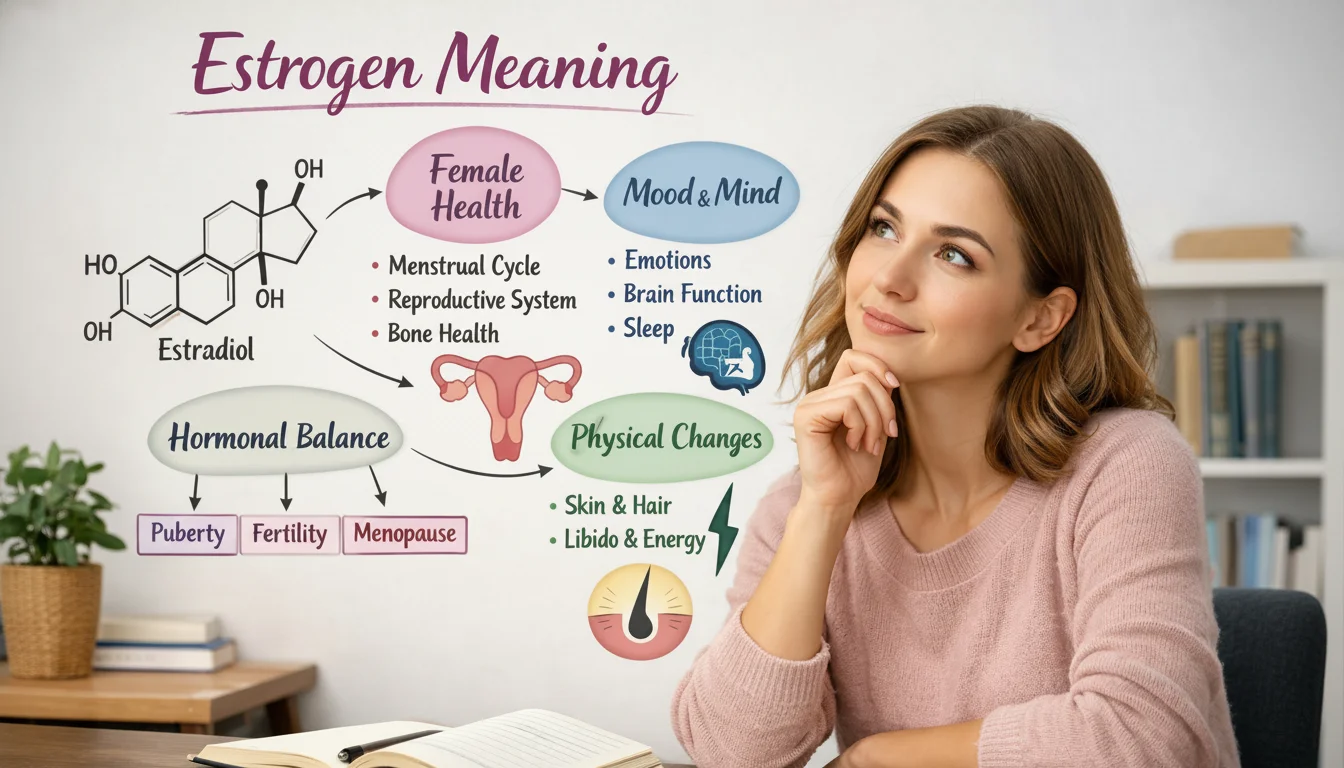
Estrogen is one of the primary female sex hormones responsible for the development and regulation of the female reproductive system. It plays a crucial role in puberty, menstruation, fertility, pregnancy, and overall reproductive health.
In females, estrogen helps:
Develop breasts and other female characteristics
Regulate the menstrual cycle
Support reproductive organs
Maintain bone strength
Promote healthy skin and hair
Influence mood and cognitive function
Although estrogen is often called the “female hormone,” it affects many systems throughout the body beyond reproduction. Proper estrogen levels are essential for a woman’s physical and hormonal well-being.
Estrogen Meaning in Men
While estrogen is primarily associated with women, men also produce estrogen in smaller amounts.
In men, estrogen helps:
Support bone health
Regulate libido (sex drive)
Contribute to sperm production
Maintain cardiovascular health
Influence brain function
Most male estrogen is produced through the conversion of testosterone into estrogen by an enzyme called aromatase.
Healthy estrogen levels are important for men, but excessively high or low levels may contribute to hormonal imbalances and health issues.
High Estrogen Meaning
High estrogen refers to estrogen levels that are above the normal range for a person’s age and sex.
In women, elevated estrogen levels may be associated with:
Irregular menstrual cycles
Breast tenderness
Bloating
Weight gain
Mood changes
Headaches
In men, high estrogen levels may contribute to:
Reduced libido
Fatigue
Erectile difficulties
Increased body fat
Breast tissue enlargement
High estrogen can result from natural hormonal fluctuations, medications, certain medical conditions, or lifestyle factors. A healthcare professional can determine whether estrogen levels are abnormal through laboratory testing.
Estrogen Meaning Simple
In simple terms, estrogen is a hormone that helps control growth, reproduction, and many body functions.
It is mainly produced in the ovaries in women and in smaller amounts in men and the adrenal glands.
A simple definition of estrogen is:
“A hormone that helps regulate sexual development, reproductive health, and various functions throughout the body.”
Because it influences many organs and tissues, estrogen is one of the body’s most important hormones.
Estrogen and Oestrogen Meaning
Estrogen and oestrogen mean exactly the same thing.
The difference is based on regional spelling:
Estrogen – American English spelling
Oestrogen – British English spelling
Both words refer to the same group of hormones that regulate reproductive development and numerous bodily functions.
Whether you see “estrogen” or “oestrogen,” the meaning remains identical.
Estrogen and Progesterone
Estrogen and progesterone are the two primary female reproductive hormones that work together to regulate the menstrual cycle and reproductive health.
Estrogen
Estrogen helps:
Develop female characteristics
Regulate menstrual cycles
Prepare the uterine lining for pregnancy
Progesterone
Progesterone helps:
Maintain the uterine lining
Support pregnancy
Regulate menstrual cycles
Balance estrogen’s effects
The balance between estrogen and progesterone is important for hormonal health, fertility, and normal reproductive function.
Estrogen Function
Estrogen performs numerous functions throughout the body.
Key estrogen functions include:
Reproductive Health
Regulates menstrual cycles
Supports fertility
Helps prepare the uterus for pregnancy
Sexual Development
Promotes breast development
Contributes to female body shape
Supports puberty
Bone Health
Helps maintain bone density
Reduces the risk of bone loss
Cardiovascular Health
Supports healthy blood vessels
Influences cholesterol levels
Brain Function
Affects mood and emotional well-being
Supports cognitive function
These functions demonstrate why estrogen is considered one of the body’s most influential hormones.
Estrogen Meaning in Chinese
In Chinese, estrogen is commonly translated as:
雌激素 (Cí Jīsù)
This term literally means:
雌 (Cí) – Female
激素 (Jīsù) – Hormone
The Chinese translation is widely used in medical, scientific, and educational contexts to describe the hormone responsible for many aspects of female reproductive development and hormonal regulation.
Summary
Estrogen is a vital hormone that plays an essential role in reproductive health, sexual development, bone strength, cardiovascular function, and overall well-being. Although it is most commonly associated with women, men also require healthy estrogen levels for normal body function. Understanding the meaning of estrogen, its relationship with progesterone, and its role in the body can help individuals better appreciate the importance of hormonal balance and health.

What Does “Estrogen Meaning” Mean in Chat or Text?
Clear Definition
The estrogen meaning refers to a group of hormones found in the human body, mainly responsible for:
- Development of female physical features
- Regulation of the menstrual cycle
- Supporting reproductive health
- Maintaining bone and skin health
In simple words:
Estrogen = a key hormone that helps control female body development and reproductive functions
Different Meanings Based on Context
The word “estrogen” is mainly used in science and health, but its meaning can slightly vary depending on context:
- Biology context: A hormone in the endocrine system
- Medical context: A hormone tested or balanced in treatments
- Health context: Related to mood, energy, and body changes
- Fitness/wellness discussions: Linked to hormonal balance and well-being
So, the estrogen meaning always relates to body hormones and health functions.
Brief Origin/Scientific Background
The word “estrogen” comes from:
- Greek root “oistros” meaning frenzy or desire
- “-gen” meaning producer of
It was named based on its role in:
- Regulating reproductive cycles
- Influencing biological development
Over time, medical science identified estrogen as a group of hormones (not just one), mainly produced in:
- Ovaries (in females)
- Adrenal glands
- Fat tissues (in small amounts)
How People Use “Estrogen Meaning” in Real Conversations
Platforms:
You’ll commonly see the term estrogen in:
- Biology textbooks and lectures
- Health blogs and medical websites
- TikTok/Instagram health awareness videos
- Reddit health discussions
- Fitness and hormone balance content
- Online Q&A forums
When It Is Appropriate vs Awkward
Appropriate:
The word “estrogen” is correctly used in:
- Medical discussions
- Biology or science education
- Hormone health conversations
- Doctor-patient communication
- Wellness and fitness guidance
Awkward:
It is not suitable for:
- Casual slang or joking conversations
- Meme culture (unless educational humor)
- Misusing it in unrelated topics
- Using it as an insult or stereotype
Simply put:
Estrogen is a scientific term, not internet slang.
Casual Insight
In modern health conversations, people often say:
“My estrogen levels are low/high”
This refers to hormone balance, not personality or behavior.
Real-Life Examples of “Estrogen Meaning” in Text Messages
Example 1:
“Estrogen helps regulate the menstrual cycle.”
Explanation: It controls reproductive health processes.
Example 2:
“Doctors checked her estrogen levels.”
Explanation: A medical test for hormone balance.
Example 3:
“Low estrogen can affect mood and energy.”
Explanation: Hormones influence emotional and physical well-being.
Example 4:
“Estrogen plays a role in bone health.”
Explanation: It helps maintain strong bones.
Example 5:
“During puberty, estrogen levels increase.”
Explanation: It supports physical development.
Example 6:
“Hormone therapy may include estrogen treatment.”
Explanation: Used in medical treatments to balance hormones.
Common Mistakes & Misunderstandings
Thinking Estrogen Is Only About Females
While estrogen is more associated with female health:
- It is also present in males in small amounts
- It plays a role in both bodies
Confusing It With Personality or Behavior
Some people wrongly link hormones with behavior in a casual way, but:
- Estrogen is a biological hormone
- It does not define personality
Misusing It in Social Media Context
On TikTok or memes, it is sometimes used incorrectly or humorously without context.
Thinking It Is One Single Hormone Only
Estrogen is actually a group of hormones, including:
- Estradiol
- Estrone
- Estriol
Self-Diagnosing Without Medical Advice
Many people assume hormone imbalance based on online content, but:
- Only medical testing can confirm levels
- Professional advice is important
Related Health & Hormone Terms
Similar Terms
- Testosterone – primary male hormone
- Progesterone – hormone related to pregnancy
- Hormones – chemical messengers in the body
- Endocrine system – hormone-producing system
- Menstrual cycle – monthly reproductive cycle
Short Explanations
- Testosterone: Main male hormone
- Progesterone: Supports pregnancy
- Endocrine system: Controls hormone production
SEO Internal Linking Opportunities
You can link this article to:
- Testosterone meaning explained
- Hormones and body functions guide
- Menstrual cycle simple explanation
- Endocrine system basics 2026