
What Does “Aphantasia Meaning” Refer To?
Clear Definition
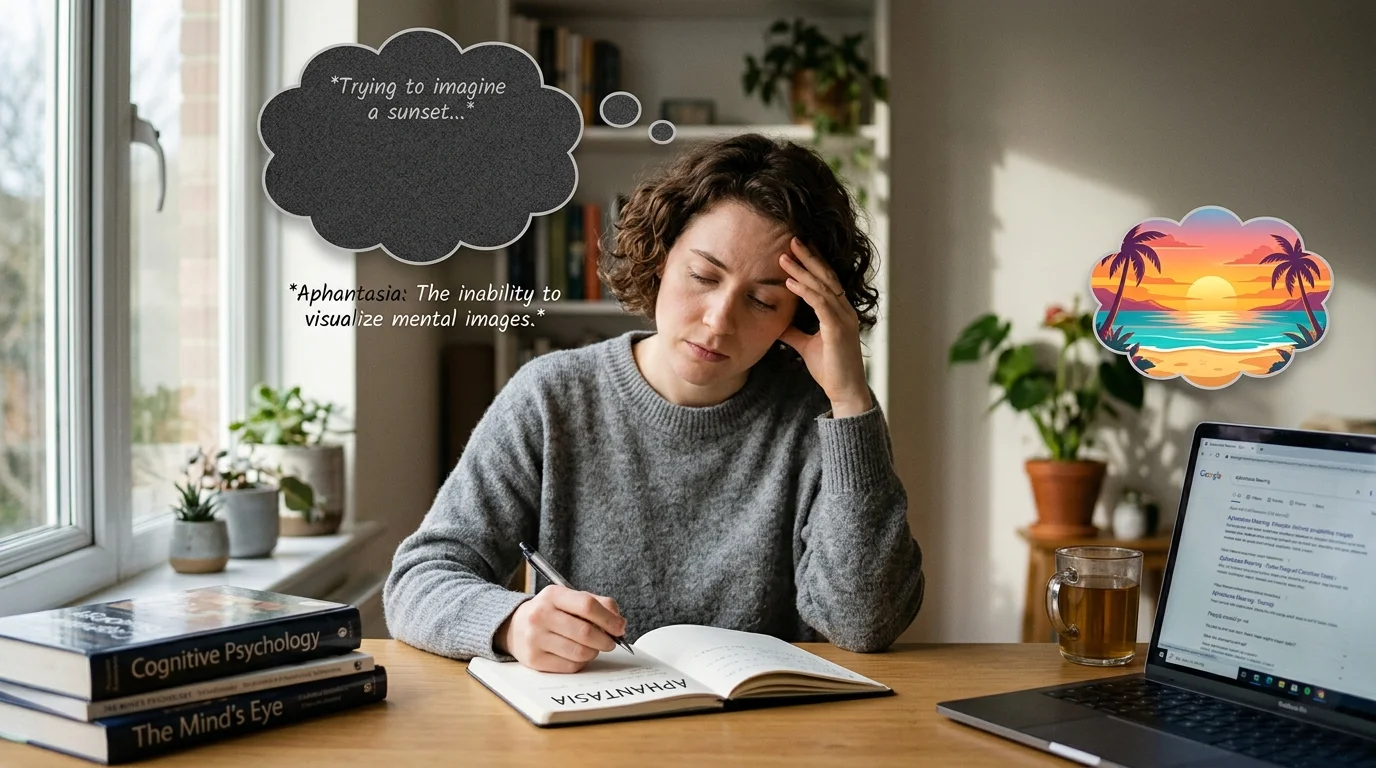
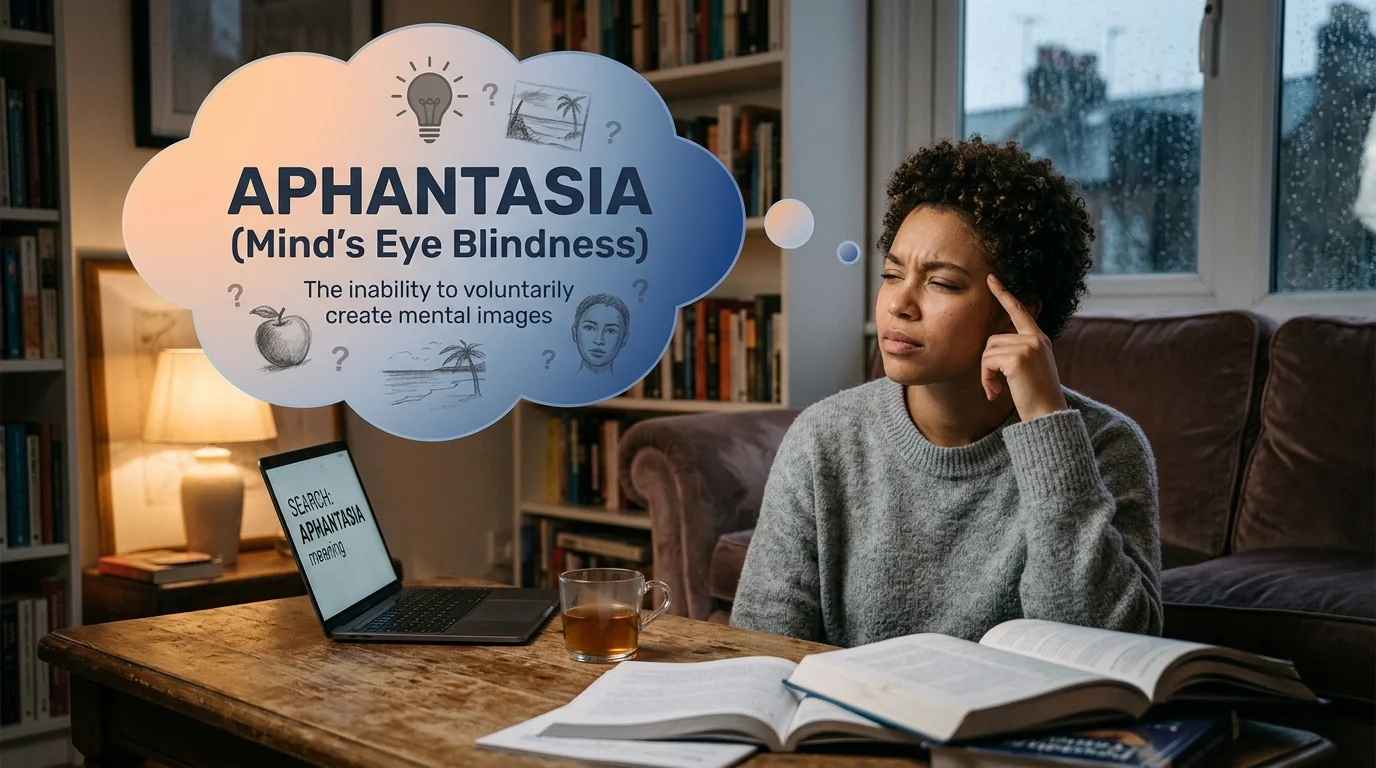
Aphantasia means the inability to voluntarily create mental images in your mind.
In simple words:
When most people close their eyes and imagine something, they “see” it in their mind. A person with aphantasia does not see any visual image—they only know the idea or concept.
Aphantasia
Aphantasia is not a disease in the harmful sense. It is a natural variation in how the brain processes imagination and memory.
Simple Example
- Imagine a red apple
- Some people “see” the apple in their mind
- A person with aphantasia only thinks: “red, round fruit”
No mental picture appears.
Different Context Meanings
In most discussions, “aphantasia meaning” is used to explain:
- A cognitive condition
- A difference in imagination style
- A psychological variation in visualization ability
It is not slang or chat abbreviation—it is a scientific term used in psychology and neuroscience.
How People Use “Aphantasia Meaning” in Real Life Conversations
Where You’ll Hear It
- Psychology discussions
- Social media explanations (TikTok, YouTube)
- Reddit communities
- Education and learning content
- Casual talks about memory and imagination
When It Comes Up
People usually mention aphantasia when:
- Comparing imagination experiences
- Talking about memory and visualization
- Realizing not everyone “sees pictures” in their mind
Casual Real-Life Insight
Many people discover aphantasia by accident when they realize:
- Others can mentally “see” scenes clearly
- But they cannot form any visual image at all
Example conversation:
- “Wait… you actually see things in your head?”
Real-Life Examples of “Aphantasia Meaning” in Text Message
Example 1:
“Close your eyes and imagine your room.”
“I know my room, but I don’t see it.”
Explanation:
The person understands the concept but has no mental image.
Example 2:
“I remember my friend, but I can’t picture their face.”
Explanation:
Memory exists without visual imagery.
Example 3:
Teacher: “Visualize a mountain.”
Student: “I can describe it, but I don’t see anything.”
Explanation:
Conceptual thinking replaces visual thinking.
Example 4:
“I thought ‘imagine a beach’ was just a phrase, not something people actually see.”
Explanation:
Common realization among people with aphantasia.
Example 5:
“I don’t replay scenes in my head like movies. I just remember facts.”
Explanation:
Thinking is non-visual but still functional.
Example 6:
“I can plan things without images, just steps and ideas.”
Explanation:
Shows that logical thinking is unaffected.
Common Mistakes & Misunderstandings
Thinking It Means No Imagination
Aphantasia does NOT mean a person cannot imagine.
They simply imagine in non-visual ways (words, logic, ideas).
Confusing It with Memory Problems
People with aphantasia can still:
- Remember information
- Recognize faces
- Learn normally
Thinking It’s a Disorder or Illness
It is not a disease. It is a natural brain difference.
Assuming Everyone Experiences It the Same Way
Aphantasia exists on a spectrum:
- Some have complete lack of imagery
- Others have weak or blurry imagery
Overdiagnosing Yourself
Not being good at visualization does not automatically mean aphantasia.
Mixing It with Dreams
Some people still see images in dreams, while others don’t—it varies.
Related Slangs & Abbreviations
Hyperphantasia
Opposite of aphantasia
→ Extremely vivid mental images
Mental Imagery
The ability to “see” things in your mind
Visualization
Creating mental pictures for thinking or planning
Cognitive Style
How a person naturally thinks and processes information
Conceptual Thinking
Thinking in ideas and logic instead of images
SEO Internal Linking Ideas
You can connect this topic with:
- hyperphantasia meaning
- how imagination works in the brain
- types of thinking styles
- visual vs non-visual memory