
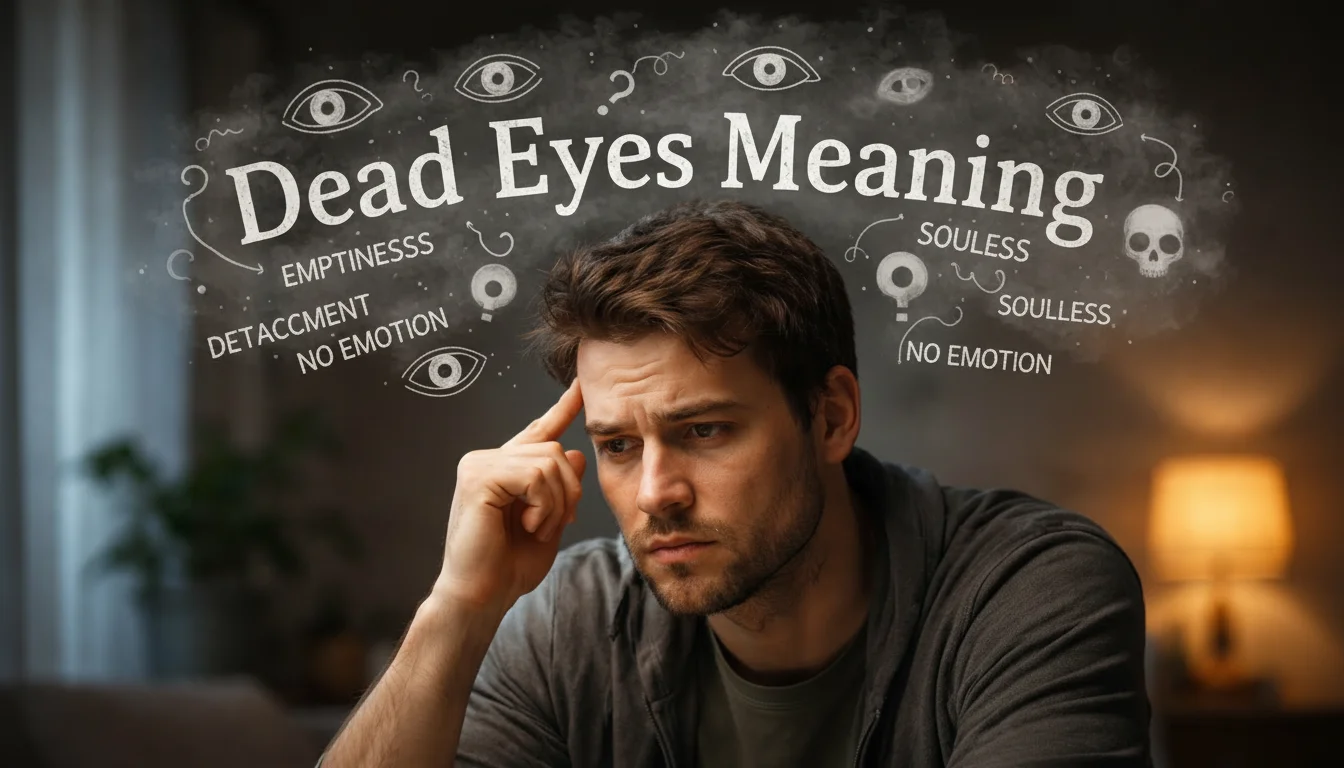

Dead Eyes Meaning

Dead Eyes Meaning Explained: Shocking Insight into This Popular Expression (Updated for 2026)

Have you ever read a comment like “He has dead eyes” in a chat, seen it in a meme, or heard it in a song and wondered what it really meant? The term dead eyes might sound dramatic, but it’s widely used to describe people’s expressions, moods, or even fictional characters.

Understanding dead eyes meaning helps you interpret emotions, social cues, or descriptions accurately—whether online, in chats, or in creative writing.

In this guide, we’ll explore dead eyes meaning in chat, text, and everyday life, give real-life examples, highlight common misunderstandings, and show related expressions. This article is fully updated for 2026 and beginner-friendly.

dead eye mean

Dead Eyes Look

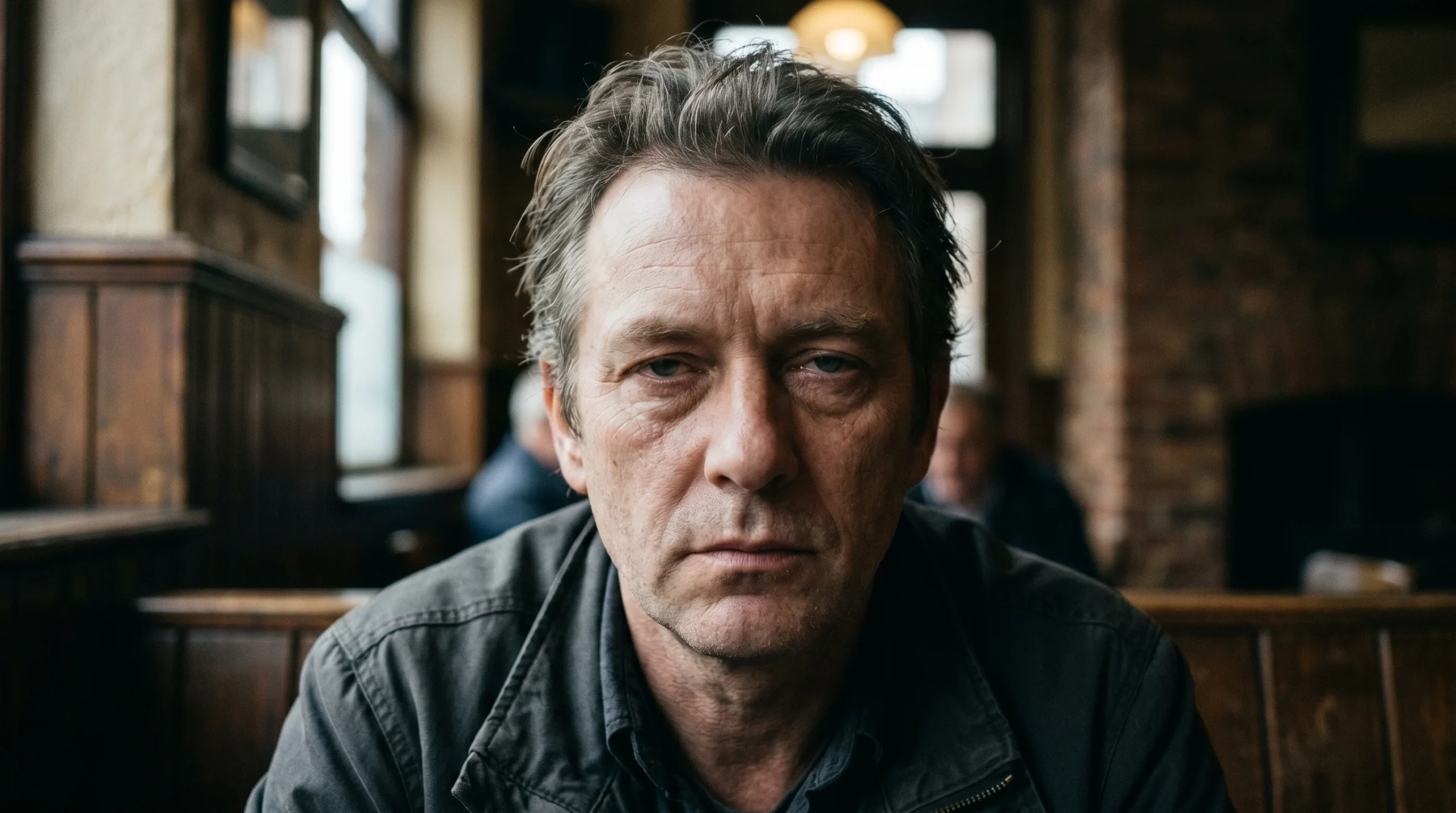
The term dead eyes look refers to a facial appearance where a person’s eyes seem empty, emotionless, lifeless, or disconnected. People often describe dead eyes as lacking the usual sparkle, warmth, or emotional expression that is typically present in healthy and engaged eyes. The look can create an impression of sadness, exhaustion, detachment, boredom, or emotional numbness.

In popular culture, the dead eyes look is frequently associated with characters who have experienced trauma, stress, depression, or intense emotional hardship. However, appearances alone cannot accurately reveal a person’s mental or emotional state. Factors such as lighting, facial structure, fatigue, camera angles, and natural eye shape can also contribute to what people perceive as a dead-eyed appearance.

Many people search for the dead eyes look because they notice it in photographs, movies, social media content, or real-life interactions. The phrase has become increasingly common in discussions about body language, psychology, and facial expressions.


Dead Eyes vs Normal Eyes

The comparison between dead eyes vs normal eyes focuses on perceived emotional expression rather than actual physical differences. Normal eyes are often described as expressive, engaged, and responsive to emotions. They may show subtle changes in pupil size, eyelid movement, and eye contact that reflect feelings such as happiness, curiosity, excitement, or concern.

Dead eyes, on the other hand, are commonly perceived as:

  • Emotionless or blank
  • Unfocused or distant
  • Lacking facial engagement
  • Showing little visible reaction to surroundings

It is important to understand that these observations are subjective. What one person interprets as dead eyes may simply be a neutral expression or a natural facial characteristic. Scientific research does not recognize “dead eyes” as a medical condition, making the distinction largely based on social perception rather than objective measurement.


Dead Eyes Psychology

In psychology, the concept of dead eyes is often linked to perceptions of emotional detachment, fatigue, burnout, trauma, depression, or reduced emotional expression. However, psychologists generally caution against diagnosing a person’s mental state based solely on eye appearance.

Several factors may contribute to the perception of dead eyes:

  • Chronic stress
  • Sleep deprivation
  • Emotional exhaustion
  • Depression
  • Anxiety
  • Social withdrawal
  • Trauma-related experiences

Psychological studies suggest that humans naturally look to the eyes when interpreting emotions and intentions. When facial expressions and eye movements provide fewer emotional cues, observers may perceive the person as having dead eyes.

Despite these associations, eye appearance alone cannot accurately indicate someone’s psychological condition. A person may have naturally neutral or stoic expressions without experiencing any emotional difficulties.


Dead Eyes Meaning Spiritual

From a spiritual perspective, the dead eyes meaning often varies depending on beliefs and traditions. Some spiritual communities interpret dead eyes as a sign of:

  • Emotional disconnection
  • Loss of purpose
  • Spiritual exhaustion
  • Low energy or vibration
  • Inner conflict
  • Soul fatigue

Certain spiritual teachings suggest that bright, expressive eyes reflect vitality and spiritual well-being, while dull or lifeless eyes may symbolize emotional burdens or a lack of connection with one’s authentic self.

However, these interpretations are based on personal beliefs rather than scientific evidence. Different cultures and spiritual traditions offer varying explanations for eye appearance, making spiritual meanings highly subjective.

Many people searching for the spiritual meaning of dead eyes are interested in energy work, personal growth, mindfulness, and understanding emotional or spiritual well-being.


Dead Eyes Meaning Slang

In modern slang, dead eyes refers to someone whose eyes appear emotionless, vacant, cold, or unsettling. The term is commonly used on social media platforms, online forums, and in everyday conversations.

Examples of slang usage include:

  • “He has dead eyes.”
  • “That character’s dead eyes made him look creepy.”
  • “After working all night, I had completely dead eyes.”

Depending on the context, the phrase can describe:

  • Extreme tiredness
  • Emotional numbness
  • A lack of enthusiasm
  • A cold personality
  • A mysterious or intimidating appearance

The slang meaning is often exaggerated and should not be interpreted as a factual assessment of someone’s personality or mental health.


Dead Eyes Theory

The dead eyes theory is an internet concept suggesting that a person’s eyes can reveal hidden aspects of their personality, emotional state, or intentions. According to this theory, individuals with dead eyes may be emotionally detached, manipulative, traumatized, or psychologically distant.

The theory gained popularity through social media discussions, true crime communities, celebrity analyses, and body language content. Supporters often claim they can identify certain personality traits simply by observing a person’s eyes.

However, there is little scientific evidence supporting these claims. Experts in psychology and behavioral science generally agree that personality, morality, and emotional health cannot be accurately determined solely from eye appearance.

As a result, dead eyes theory is considered more of an internet trend and cultural phenomenon than a scientifically validated concept.


Are Dead Eyes Attractive?

Whether dead eyes are attractive is largely a matter of personal preference. Some people find a neutral, mysterious, or emotionally reserved gaze appealing because it can create an aura of confidence, intrigue, or sophistication.

In fashion, photography, and entertainment, models and actors sometimes intentionally adopt a dead-eyed expression to create a dramatic or artistic effect. This look can be perceived as:

  • Mysterious
  • Intense
  • Powerful
  • Confident
  • Emotionally complex

Others may find expressive and emotionally engaging eyes more attractive because they convey warmth, friendliness, and authenticity.

Beauty standards vary widely across cultures and individuals, making attractiveness highly subjective rather than universal.


Are Dead Eyes Real?

Yes, dead eyes are real in the sense that people genuinely perceive certain eyes as appearing empty, emotionless, or lacking expression. However, dead eyes are not a recognized medical diagnosis or scientific condition.

The appearance can result from many factors, including:

  • Natural facial structure
  • Genetics
  • Lighting conditions
  • Fatigue
  • Stress
  • Emotional state
  • Camera angles
  • Reduced facial expressions

Because human beings rely heavily on eye contact to interpret emotions, eyes that provide fewer emotional signals are often labeled as dead eyes.

In reality, the term describes a perception rather than a medically defined phenomenon. Someone who appears to have dead eyes may simply have a neutral expression, be tired, or possess naturally less expressive facial features.

mean of dead eyes

What Does “Dead Eyes Meaning” Mean in Chat or Text?

Clear Definition

  • Dead eyes refers to a lack of visible emotion or life in someone’s eyes.
  • Often used to describe a person who seems unresponsive, tired, empty, or emotionally detached.
  • Not always literal; it can be figurative to show mood, attitude, or state of mind.

Different Meanings Based on Context

  • Emotional Context: Someone is feeling depressed, exhausted, or numb.
  • Social Context: Someone is bored, uninterested, or disconnected.
  • Pop Culture/Gaming: Often describes villains, zombies, or characters with a “chilling” stare.

Brief History & Online Chat Relevance

  • Originates from literature and film to describe lifeless or emotionless eyes.
  • In modern texting, Discord, and social media, it’s used to describe:
    • Someone looking emotionally drained
    • A character in a game or anime with an empty stare
    • A reaction to shocking, sad, or creepy situations
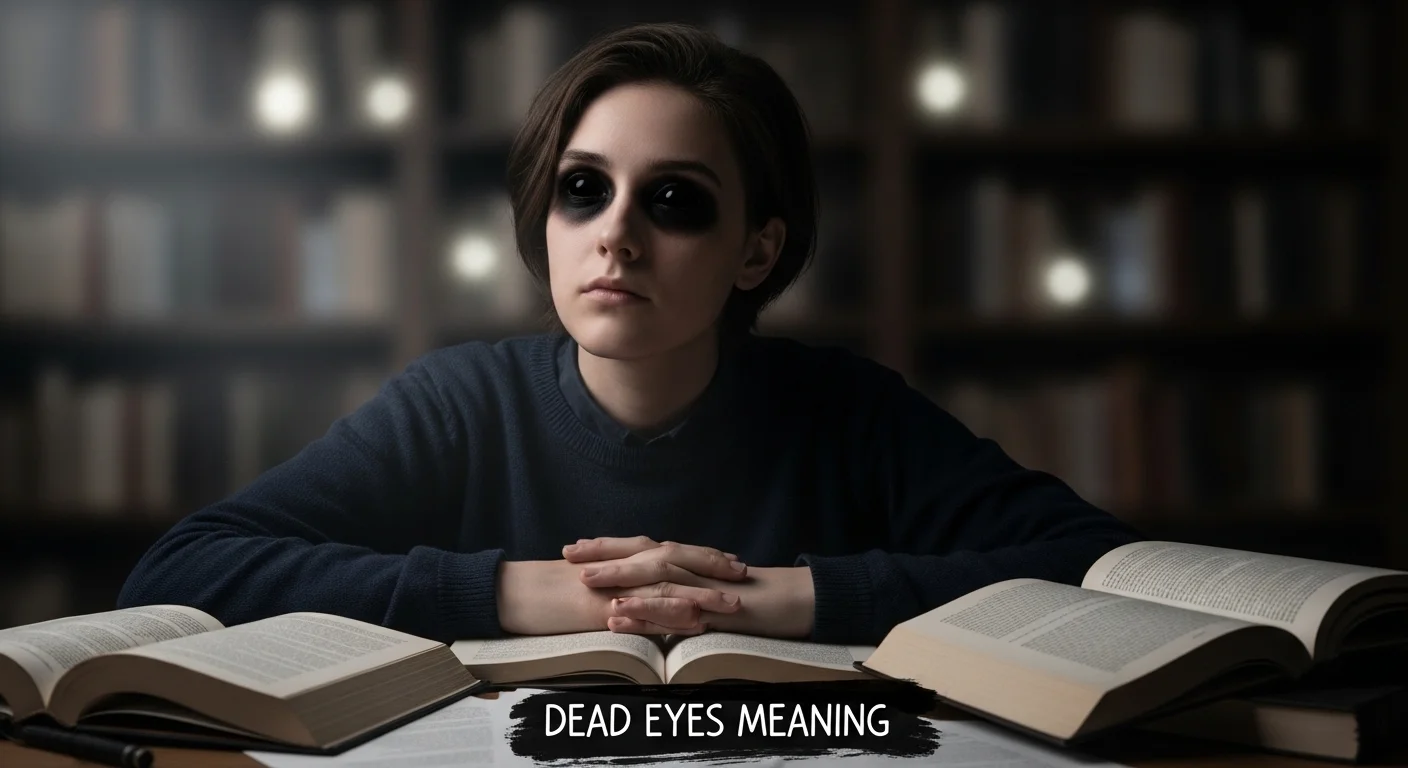
Dead Eyes Meaning

How People Use “Dead Eyes Meaning” in Real Conversations

Platforms

  • Texting Apps: WhatsApp, iMessage – describing friends or someone’s mood
  • Social Media: Twitter, Instagram, TikTok – reacting to movies, anime, or memes
  • Gaming & Forums: Discord, Reddit – describing in-game characters, NPCs, or avatars

When It’s Appropriate vs Awkward

Appropriate:

  • Commenting on someone looking tired or emotionally drained
  • Referring to a fictional character’s stare
  • Describing a shocking or eerie moment

Awkward:

  • Using it for minor expressions (“You have dead eyes because you didn’t like my post”)
  • Confusing it with literal medical conditions
  • Overusing it in jokes without context

Casual Explanations with Personal-Style Insights

  • “After finals week, I had dead eyes for a whole weekend.”
  • “That zombie in the game has legit dead eyes.”
  • Works naturally in chat and memes to show emotional emptiness, fatigue, or creepiness.

Real-Life Examples of “Dead Eyes Meaning” in Text Messages

Here are realistic examples showing how dead eyes appears in modern messaging:

Example 1:

Text: “He looked at me with dead eyes when I told the joke.”
Meaning: He appeared unimpressed or emotionless.

Example 2:

Text: “After finishing the night shift, I had dead eyes all day.”
Meaning: Fatigue made the person look lifeless or drained.

Example 3:

Text: “Dead eyes in that horror movie character gave me chills.”
Meaning: Describing a soulless or frightening stare.

Example 4:

Text: “She rolled her eyes and I swear they were dead eyes.”
Meaning: Indicating annoyance or lack of engagement.

These examples show that dead eyes meaning in chat or text depends heavily on context and tone.

Common Mistakes & Misunderstandings

Misusing the term dead eyes is common. Here are typical mistakes:

 Thinking it’s literal

“Dead eyes” rarely means literal death—it’s figurative, describing emotionless or blank eyes.

 Confusing it with “staring”

A stare can be intense but still expressive; dead eyes specifically imply emptiness or lack of feeling.

 Using it negatively toward appearance only

While often negative, it can also describe tiredness or humorously exaggerated expressions.

 Misusing in formal writing

Dead eyes is informal slang, better suited for chat, social media, or creative writing.

Related Slangs & Abbreviations

Here are terms often associated with dead eyes:

  • Blank stare – Eyes showing no emotion

  • Stone-faced – Emotionless or expressionless

  • Soulless – Figuratively lacking feeling or warmth

  • Emotionless – Neutral, detached expression

  • Deadpan – Dry or expressionless humor

These related terms often appear in online communities, memes, and casual conversations.

FAQs

What does dead eyes mean in simple words?

Dead eyes mean lifeless, emotionless, or blank-looking eyes.

Is dead eyes always negative?

Not always. It can describe fatigue, humor, boredom, or even fictional horror characters.

Can dead eyes describe mood, not just eyes?

Yes. It often describes emotional detachment or exhaustion.

Is dead eyes a slang term?

Yes, it is mostly informal and popularized online.

Where do people usually say “dead eyes”?

In chat, social media, memes, creative writing, and casual conversation.

Conclusion

Understanding dead eyes meaning helps you interpret both literal and figurative expressions in text, chat, or social media. It conveys lifelessness, emptiness, or detachment, whether in response to fatigue, boredom, humor, or fictional depictions.

While often negative, the term can also be used humorously or descriptively. Knowing its proper use can help you communicate tone and emotion more clearly online and in writing.

Whether you’re describing a friend, a meme, a character, or your own mood, using dead eyes correctly ensures your description is accurate and relatable.

Scroll to Top