
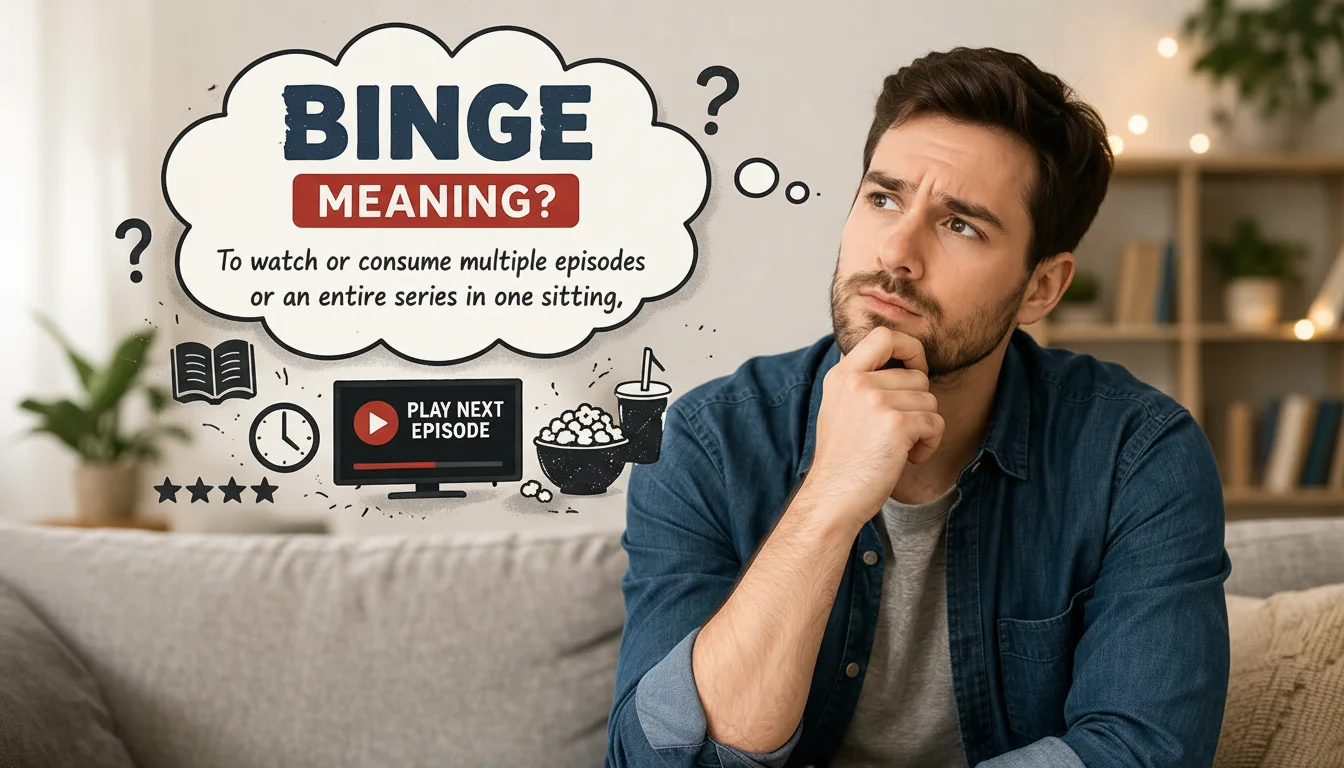
What Does “Binge Meaning” Mean in Chat or Text?
Binge means doing something excessively in a short period of time, often without stopping or moderation.
Clear definition
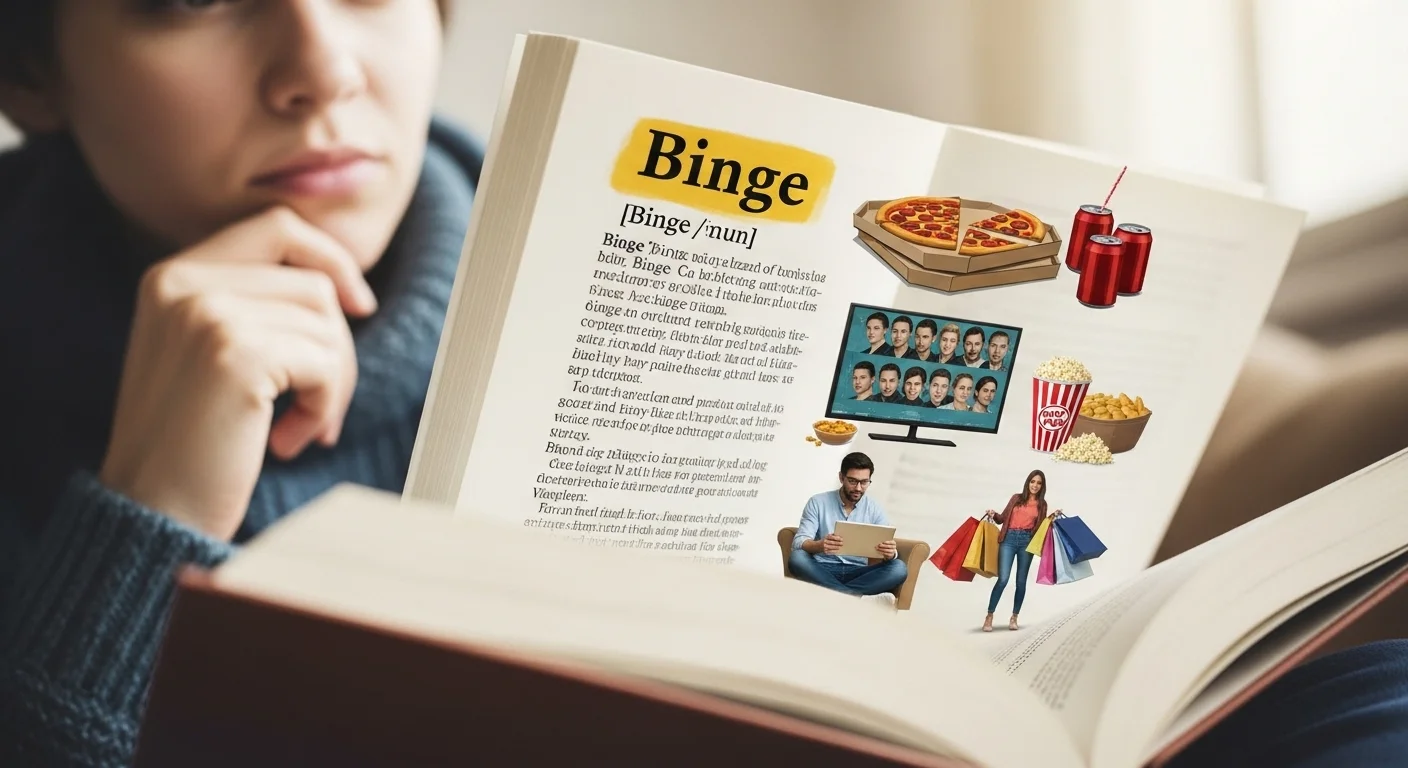
A binge is an intense period of indulging in something excessively, often more than usual or in a short time. It can refer to food, TV, video games, shopping, or any activity.
Different meanings based on context
- Entertainment: Watching multiple episodes or movies back-to-back (“binge-watching”).
- Food/Drink: Eating or drinking excessively in a short period (“binge-eating”).
- Other Activities: Gaming, shopping, or social media can also be binged.
Brief origin/history
The word binge dates back to the late 19th century in English, originally meaning to soak or flood and later to overindulge in alcohol. Today, it’s used more broadly for any activity done excessively over a short period.
How People Use “Binge Meaning” in Real Conversations
Understanding Binge Meaning helps in texting, social media, and daily chats.
Platforms
- Texting: “I binge-watched the entire season last night.”
- Instagram/TikTok: Posts or captions about bingeing shows, movies, or trends
- Discord/Forums: Gaming or TV show communities discussing long sessions
- Group chats: Sharing weekend indulgences or habits
Appropriate vs Awkward Usage
Appropriate:
- “I binge-watched Stranger Things over the weekend.”
- “She binged on chocolate while watching a movie.”
- “We binged Fortnite all night.”
Awkward or incorrect:
- Using binge casually for small, normal actions (“I binged on one episode”—not really bingeing)
- Misusing it in professional emails
- Confusing it with a single indulgence
Casual explanations with personal-style insights
Friends often say: “It basically means going all out on something in one go—like eating, watching, or playing too much at once.” Simple, relatable, and accurate.
Real-Life Examples of “Binge Meaning” in Text Messages
Here’s how binge meaning in text looks in real situations:
Example 1:
Text: “I binge-watched three seasons yesterday.”
Meaning: Watching many episodes continuously.
Example 2:
Text: “I shouldn’t binge eat when I’m stressed.”
Meaning: Overeating due to emotional reasons.
Example 3:
Text: “Stop binge scrolling and sleep.”
Meaning: Spending too much time on social media.
Example 4:
Text: “Weekend binge gaming session ruined my sleep.”
Meaning: Playing games excessively without breaks.
Example 5:
Text: “I’m in a binge mood today.”
Meaning: Planning to overindulge casually, often humorously.
These examples show that binge in chat is context-driven and often informal.
Common Mistakes & Misunderstandings
People often misunderstand or misuse binge. Here are the most common mistakes:
Thinking binge is always negative
Not always. Binge can be neutral or playful, especially with shows or movies.
Confusing binge with addiction
Binge means short-term overuse, while addiction is long-term dependency.
Using binge in formal writing
Binge is informal and best suited for casual conversation or lifestyle topics.
Assuming binge only applies to food
Binge applies to media, habits, digital behavior, and entertainment, not just eating.
Ignoring tone
“Binge watching” sounds casual, but “binge eating” often carries a serious or emotional tone.
Related Slangs & Abbreviations
Here are commonly related terms you’ll see with binge:
Binge-watch – Watching multiple episodes nonstop
Overdo it – Doing something excessively
No-life – Slang for excessive gaming or online activity
Doomscrolling – Endless scrolling of negative content
Marathon – Watching or doing something continuously
These terms are useful for internal linking and semantic SEO.