

Clinicals Meaning in Medical
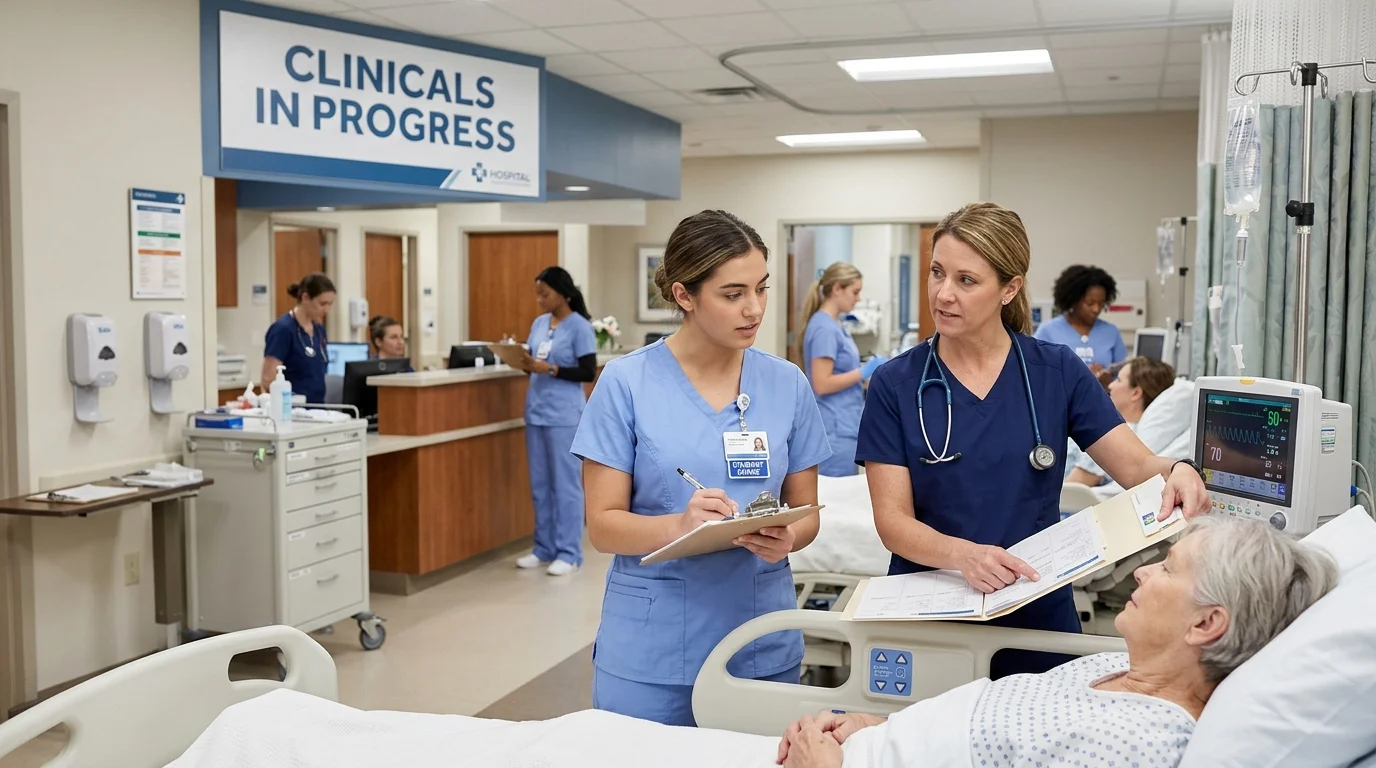
In the medical field, clinicals refers to the practical, hands-on training that healthcare students complete in real healthcare settings under professional supervision.
Clinicals allow students to:
Apply classroom knowledge
Work with real patients
Develop medical skills
Learn professional procedures
Gain practical experience
Medical clinicals are a crucial part of healthcare education because they bridge the gap between theory and practice.
Example
“A medical student begins clinicals at a hospital during the third year of training.”
Clinicals Meaning Nursing
In nursing, clinicals are supervised training experiences where nursing students practice patient care in hospitals, clinics, nursing homes, and other healthcare facilities.
During nursing clinicals, students may:
Monitor patients
Take vital signs
Administer medications under supervision
Assist healthcare teams
Practice communication skills
Example
“Nursing students spend several hours each week in clinicals to gain real-world experience.”
Clinical training is essential for developing competence and confidence before becoming a licensed nurse.
Clinical Performance Meaning
Clinical performance refers to how effectively a healthcare professional or student performs medical duties and patient-care responsibilities.
Clinical performance is often evaluated based on:
Medical knowledge
Technical skills
Patient communication
Professional behavior
Critical thinking
Safety practices
Example
“The student’s clinical performance improved significantly during the semester.”
Strong clinical performance demonstrates competence and professionalism in healthcare settings.
Clinical Person Meaning
A clinical person is someone who approaches situations in a highly objective, analytical, and professional manner, often focusing on facts rather than emotions.
In healthcare, the term may refer to:
Doctors
Nurses
Therapists
Medical specialists
In everyday language, describing someone as clinical may mean they appear:
Logical
Detached
Precise
Methodical
Example
“His clinical approach helped him make difficult decisions calmly.”
Clinical Win Meaning
A clinical win generally refers to a positive outcome achieved in a healthcare, medical, or research setting.
Examples include:
Successful treatment results
Improved patient outcomes
Effective therapies
Positive clinical trial findings
Significant healthcare achievements
Example
“The new treatment was considered a clinical win because patients recovered faster.”
The phrase is commonly used in medicine, healthcare management, and clinical research.
Clinical in a Sentence
Here are examples showing how the word clinical is used in sentences:
“The doctor conducted a clinical examination.”
“She completed her clinical training at a local hospital.”
“The researchers published their clinical findings.”
“His clinical judgment helped identify the problem quickly.”
“The nurse demonstrated excellent clinical skills.”
These examples illustrate how the term is commonly used in medical and professional contexts.
Clinical Look Meaning
A clinical look usually refers to an appearance that seems clean, professional, organized, and functional.
Characteristics may include:
Minimal decoration
Simple design
Neutral colors
Sterile or highly organized appearance
Example
“The office had a clinical look with white walls and modern furniture.”
The phrase can sometimes imply a lack of warmth or personal touches.
Clinical Expression Meaning
A clinical expression refers to a facial expression that appears neutral, controlled, professional, or emotionally detached.
It may convey:
Objectivity
Seriousness
Professionalism
Careful observation
Example
“The surgeon maintained a clinical expression while reviewing the patient’s chart.”
In non-medical settings, the phrase can suggest a person is showing little visible emotion while focusing on facts or analysis.
Conclusion
The term clinicals is most commonly associated with hands-on medical and nursing training, where students gain practical experience in healthcare environments. Related terms such as clinical performance, clinical win, clinical expression, and clinical look all reflect the broader meaning of clinical—being professional, objective, precise, and connected to healthcare practice. Understanding these meanings helps clarify how the word is used in medicine, education, and everyday language.
What Does “Clinicals Meaning” Mean in Chat or Text?
Simple Definition
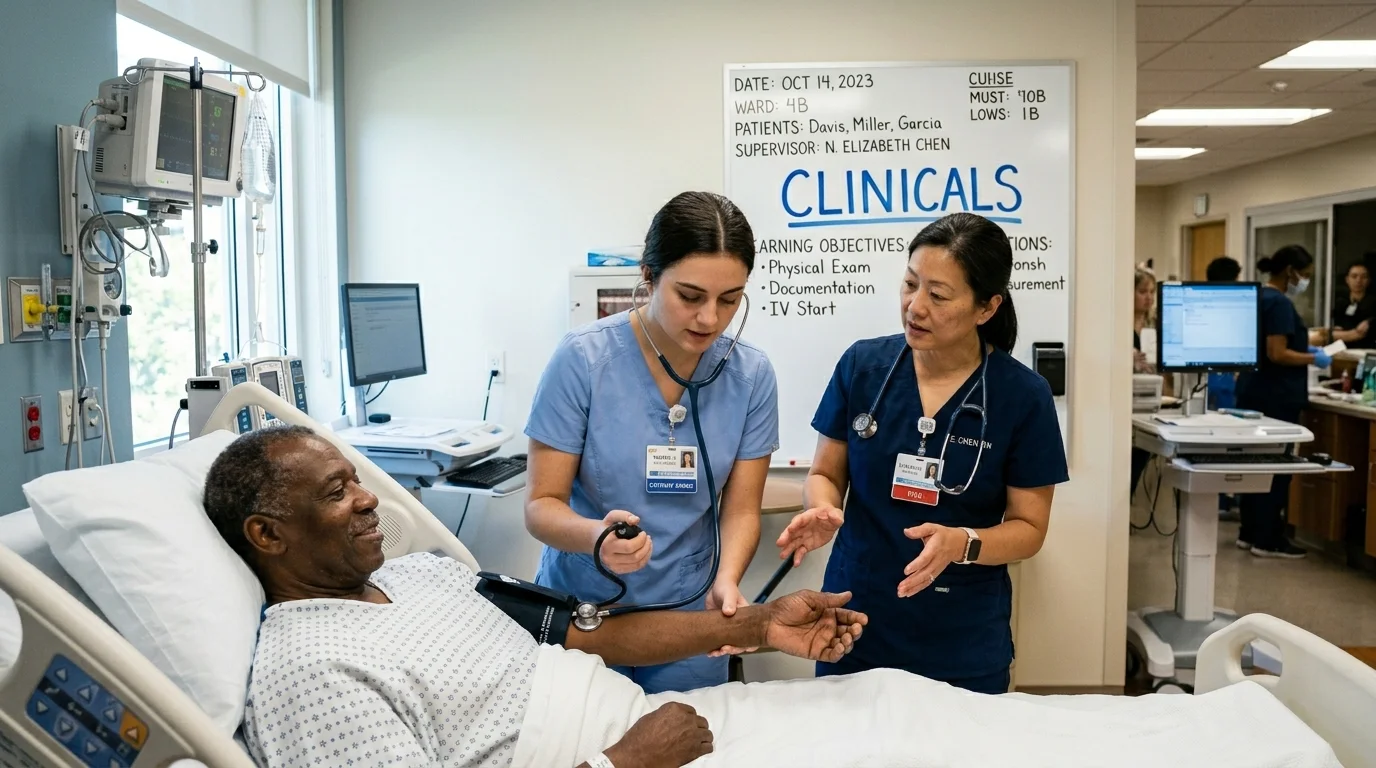
Clinicals is a shortened term for clinical training or clinical practice. It describes hands-on training in a real healthcare setting, such as a hospital, clinic, or patient care facility. Students in nursing, medical, pharmacy, or allied health programs use this term casually in conversation to describe their work.
Example in chat:
“Can’t hang out tonight, I have clinicals at 6 AM.”
Meaning: They are going to a hospital or clinic for training.
Important: Clinicals is not internet slang, but students use it as a casual, quick term.
Meaning Based on Context
Depending on context, clinicals can convey different ideas:
Academic context – Required hands-on training for graduation.
“My clinicals start next week.”
Stress context – Highlights exhaustion or challenge.
“Clinicals are brutal today.”
Achievement context – Marks completion of a milestone.
“Finished my first clinical!”
Schedule context – Shows time commitment.
“Can’t meet up, clinicals all morning.”
Brief Origin
The word comes from “clinical rotations”, a core part of healthcare programs.
Students naturally shortened it to clinicals for convenience in texts and conversations.
Unlike early chat slang like ASL (“Age, Sex, Location?”), this is professional terminology used casually.

How People Use “Clinicals Meaning ” in Real Conversations
Platforms
Clinicals appears on multiple platforms:
Texting: “Sorry for late reply, clinicals ran long.”
Instagram/Snapchat: “Survived 12-hour clinical shift!” (often with scrub selfies)
Discord/Reddit forums: “Which hospital are your clinicals at?”
Dating apps: “Clinicals all week, can’t meet up.”
Online education content: Videos or posts about nursing and medical school life
When It’s Appropriate vs Awkward
Appropriate:
Talking with classmates or fellow healthcare students
Posting about hospital experience or schedule
Academic discussions or study groups
Awkward / Confusing:
Using it with people outside healthcare programs
Assuming everyone knows the term
Using it in business or non-medical context
Example of awkward use:
“I have corporate clinicals today.” — Sounds strange because clinicals are specific to healthcare training.
Casual Explanation With Personal-Style Insights
Think of clinicals as shorthand for:
Waking up very early for hospital shifts
Long hours on your feet
Learning directly from real patients
Feeling mentally and physically exhausted
In texts or casual conversation, “clinicals” often implies stress, growth, and responsibility.
“Clinicals humbled me.”
This indicates the hands-on experience was challenging and eye-opening.
Real-Life Examples of “Clinicals Meaning” in Text Messages
Example 1:
Friend: “Why are you up so early?”
You: “Clinicals at 5 AM.”
Meaning: Early hospital training.
Example 2:
Student: “Failed my skills check during clinicals.”
Meaning: Did not pass a practical assessment at the hospital.
Example 3:
Instagram caption: “Coffee + clinicals = survival mode.”
Meaning: Clinicals are exhausting but part of learning.
Example 4:
Dating app: “Clinicals all week, can’t meet up.”
Meaning: Busy schedule due to training hours.
Common Mistakes & Misunderstandings
Confusing clinicals with a medical condition
Some people assume “clinicals” means someone is sick. Reality: It strictly refers to training, not illness.
Thinking clinicals is slang
It’s a professional term casually used by students, not internet slang.
Using it outside healthcare context
“Corporate clinicals” or “business clinicals” would be awkward because clinicals is specific to healthcare training.
Misreading tone
“Clinicals are brutal.”
This does not mean danger or illness — it indicates intense, challenging training.
Related Slangs & Abbreviations
While not slang itself, clinicals appears alongside other healthcare abbreviations:
RN – Registered Nurse
MD – Medical Doctor
CNA – Certified Nursing Assistant
BSN – Bachelor of Science in Nursing
Pre-med – Pre-medical student
Rotations – Another term for clinical placements
Shift – Hospital work period
On-call – Required to be available for patient care
Knowing these helps contextualize clinicals in conversation and student life.