
If you’ve seen “RCTA” on your Toyota dashboard or in a vehicle brochure and wondered what it means, you’re not alone. Many drivers search for RCTA Toyota meaning after noticing the term in their car’s safety settings.
In 2026, modern vehicles are packed with smart driver-assistance technologies. Understanding these features helps you drive more safely and confidently.
Let’s break it down in simple, practical language.

BSM Toyota Meaning
BSM in Toyota stands for Blind Spot Monitor. It is an advanced driver-assistance feature that helps detect vehicles traveling in your blind spots—areas that are difficult to see using the side mirrors alone.
When another vehicle enters your blind spot, the system illuminates a warning indicator in the corresponding side mirror. If you activate the turn signal while a vehicle is detected, the warning light usually flashes to alert you of a potential collision.
Benefits of Toyota BSM
- Improves lane-change safety
- Alerts drivers to nearby vehicles
- Reduces the risk of side-impact collisions
- Enhances driver awareness on highways
Example:
- The BSM light came on because another car was in the driver’s blind spot.
RSA Toyota Meaning
RSA stands for Road Sign Assist. This Toyota safety feature uses a forward-facing camera to detect certain road signs and display them on the vehicle’s multi-information display.
Depending on the Toyota model and market, RSA can recognize signs such as:
- Speed limit signs
- Stop signs
- Do Not Enter signs
- Yield signs
- No Overtaking signs
Road Sign Assist helps drivers stay informed, but it should not replace paying attention to actual road signs.
RCTA Toyota Turn On
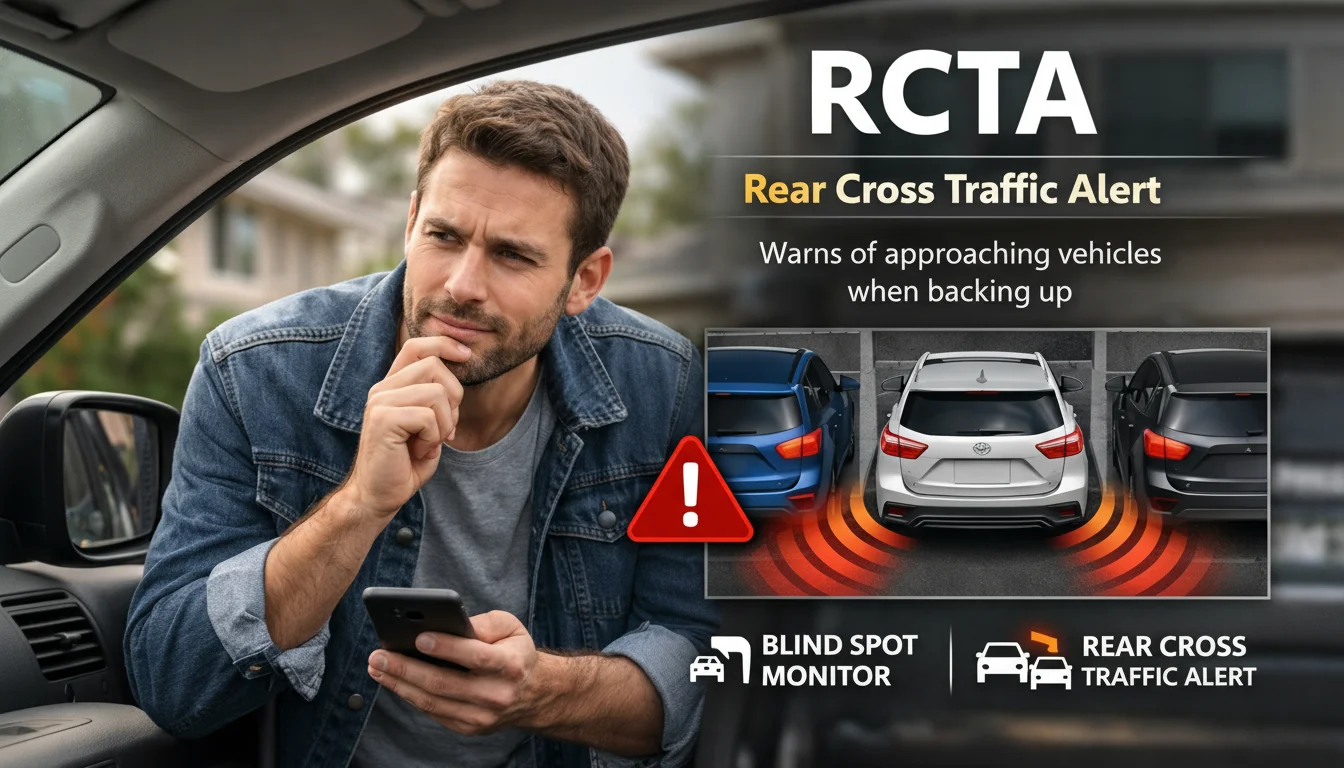
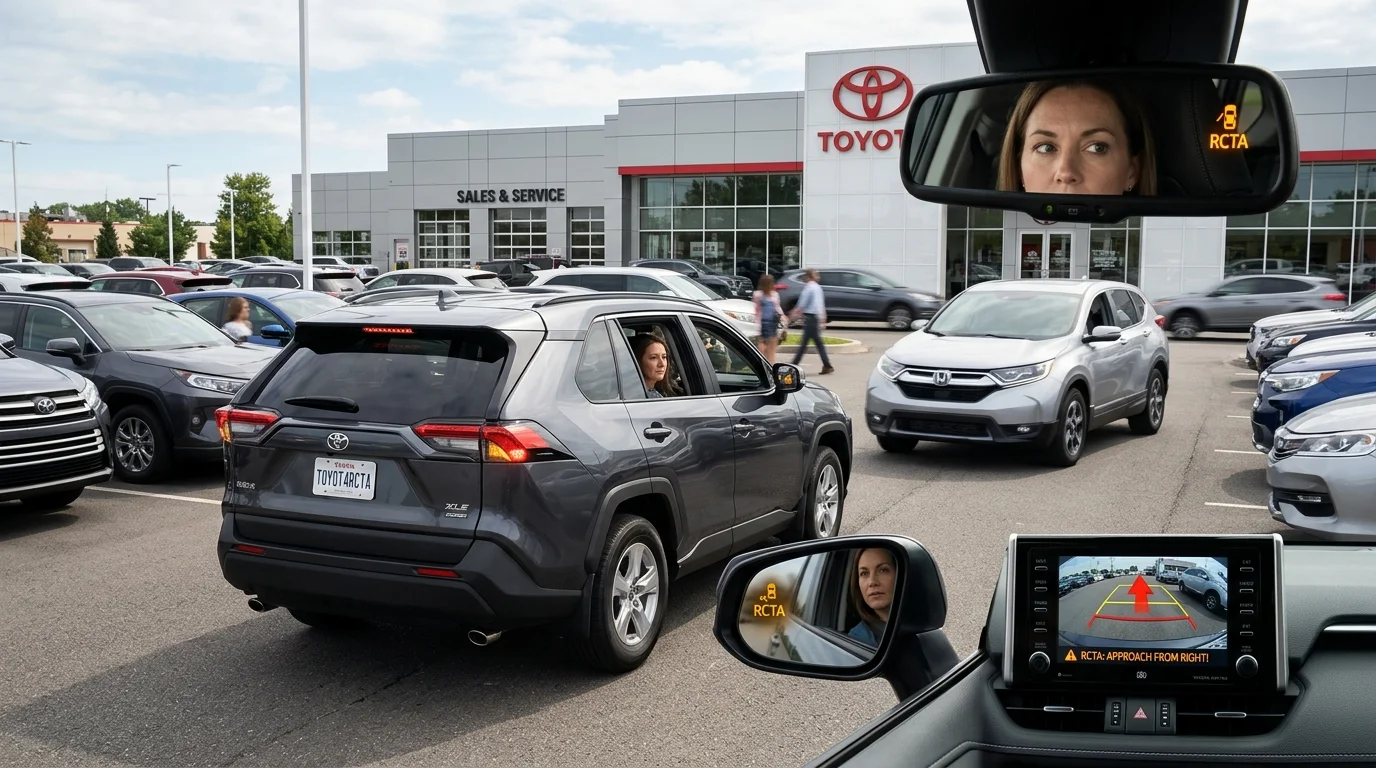
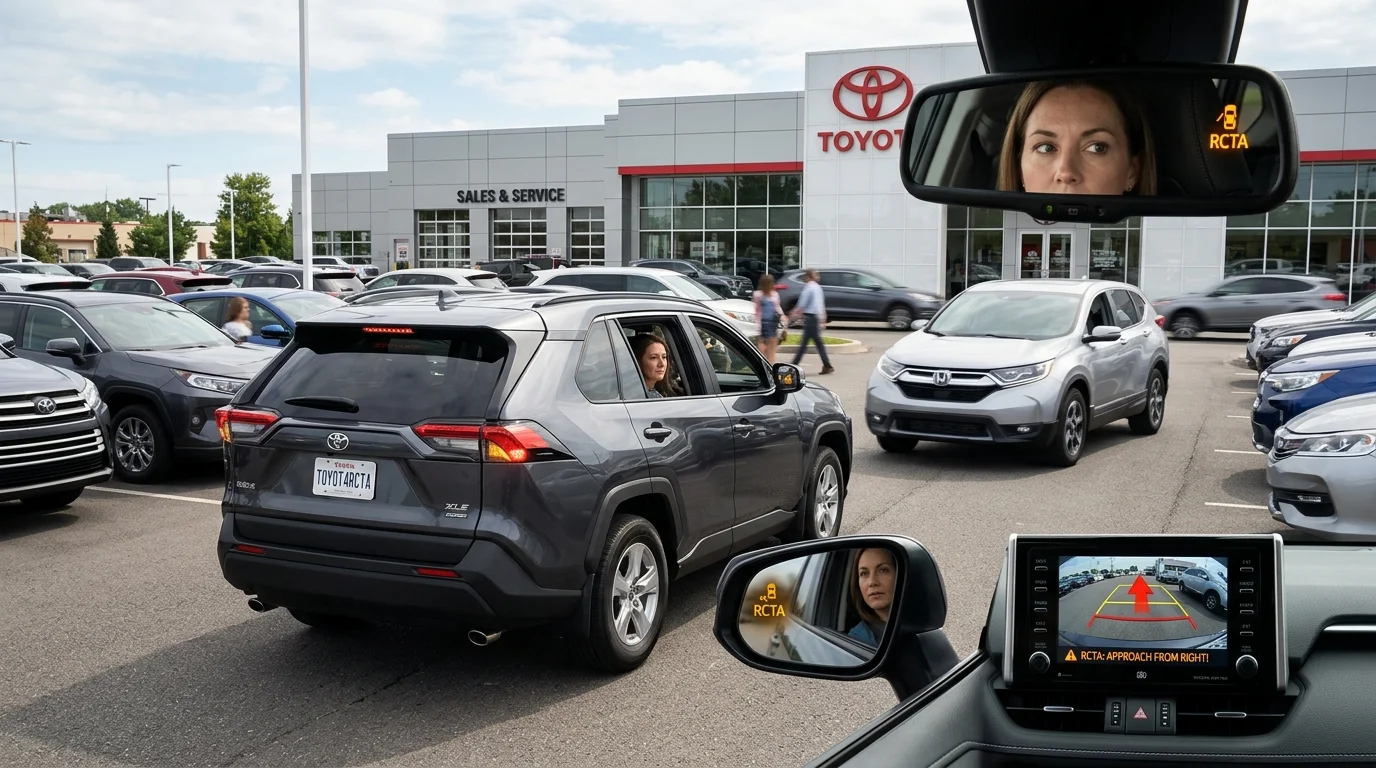
RCTA stands for Rear Cross Traffic Alert. It is designed to warn you of vehicles approaching from the left or right when you are backing out of a parking space.
On most Toyota models, RCTA automatically operates when:
- The vehicle is in Reverse (R)
- The Blind Spot Monitor (BSM) system is enabled
- Vehicle speed is low
- The sensors detect cross traffic
If your Toyota allows manual control, you can usually turn RCTA on through the vehicle’s Settings menu on the instrument cluster or multimedia display.
RCTA Off Toyota Meaning
If your dashboard displays “RCTA OFF,” it means the Rear Cross Traffic Alert system is currently disabled.
This may happen because:
- The system was manually turned off.
- Blind Spot Monitor is disabled.
- A sensor is blocked by dirt, snow, or mud.
- A temporary system malfunction has occurred.
- Certain vehicle settings have disabled the feature.
Once the issue is resolved or the system is re-enabled, the warning message should disappear.
How to Turn Off RCTA on Toyota
The exact steps vary slightly by Toyota model and year, but the general process is:
- Park the vehicle safely.
- Turn the ignition on.
- Open the Settings menu using the steering wheel controls or infotainment screen.
- Navigate to Driver Assistance or Safety Settings.
- Select RCTA (Rear Cross Traffic Alert).
- Switch the setting to Off.
Some models automatically disable RCTA when the Blind Spot Monitor is turned off.
RCTA Toyota Reset
If RCTA is not working correctly, you may be able to reset the system by:
- Turning the engine off.
- Restarting the vehicle.
- Cleaning the rear bumper sensors.
- Verifying that Blind Spot Monitor (BSM) is enabled.
- Restoring the driver’s assistance settings if available.
If the warning remains after these steps, the system may require professional inspection or calibration at a Toyota service center.
How to Turn On RCTA on Toyota Tundra
To enable Rear Cross Traffic Alert (RCTA) on most Toyota Tundra models:
- Start the vehicle.
- Open the vehicle Settings menu.
- Select Driver Assistance or Safety Features.
- Ensure Blind Spot Monitor (BSM) is turned On.
- Turn RCTA to On if a separate option is available.
- Shift into Reverse to allow the system to operate when backing up.
If RCTA does not activate, check that:
- The rear radar sensors are clean.
- No warning messages are displayed.
- The vehicle is equipped with the RCTA feature (availability depends on trim level and model year).
RCTA Toyota Camry
On supported Toyota Camry models, Rear Cross Traffic Alert (RCTA) helps detect vehicles approaching from either side while reversing out of parking spaces.
When another vehicle is detected:
- An audible warning sounds.
- Visual indicators appear on the display.
- The Blind Spot Monitor indicators may flash.
RCTA is particularly useful when backing out between larger vehicles that limit visibility.
Common reasons RCTA may not work on a Camry include:
- The feature is turned off.
- Blind Spot Monitor is disabled.
- Dirty rear radar sensors.
- Severe weather conditions affecting sensor performance.
- A system fault requiring service.
Quick Summary of Toyota Features
| Feature | Meaning | Function |
|---|---|---|
| BSM | Blind Spot Monitor | Detects vehicles in your blind spots |
| RSA | Road Sign Assist | Recognizes and displays certain traffic signs |
| RCTA | Rear Cross Traffic Alert | Warns of vehicles approaching while reversing |
| RCTA OFF | System disabled | Indicates Rear Cross Traffic Alert is turned off or unavailable |
These Toyota safety features are designed to assist the driver by improving awareness, but they do not replace careful observation of your surroundings while driving or parking.

What Does “RCTA Toyota Meaning” Mean in chat or Text?
Clear Definition
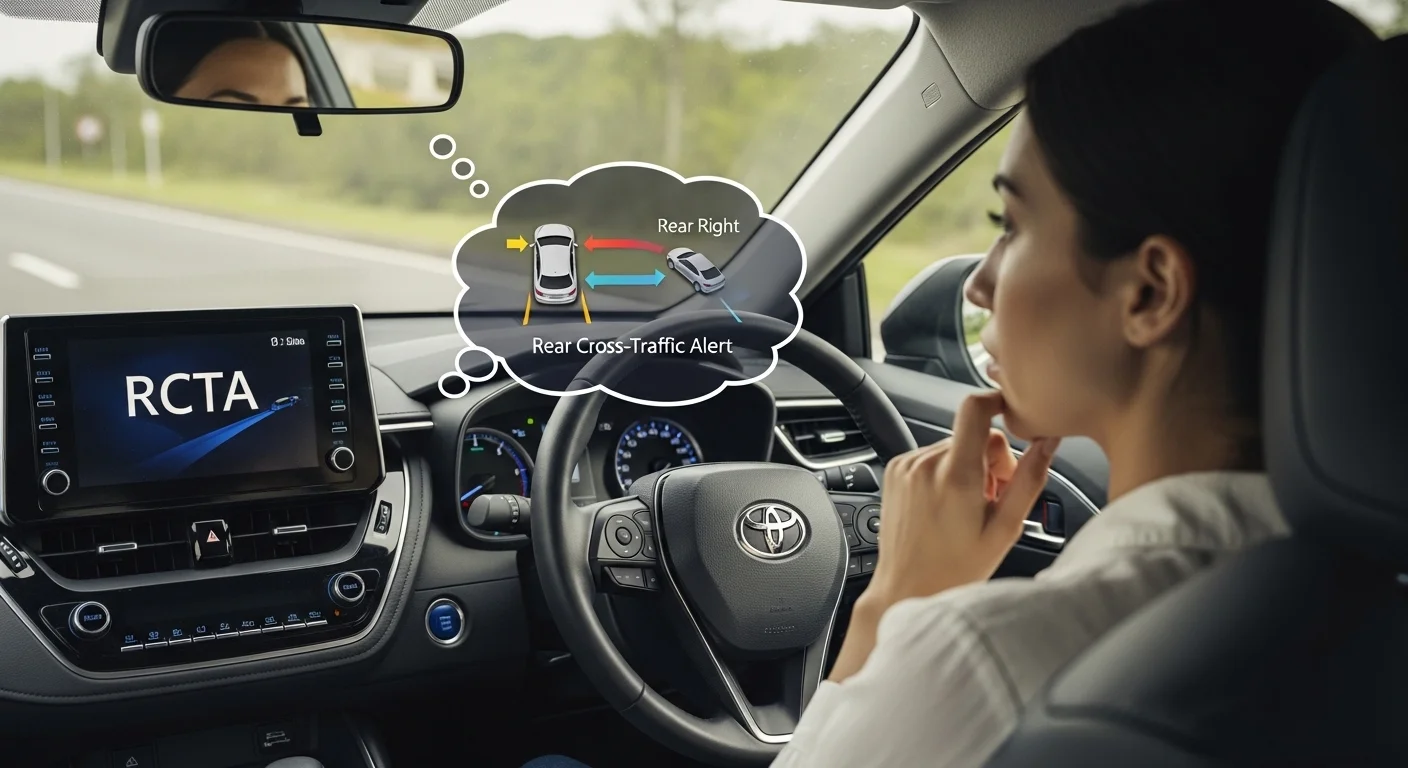
RCTA stands for Rear Cross Traffic Alert.
It is a driver-assistance safety feature that helps detect vehicles approaching from the side when you are reversing.
In simple words:
RCTA warns you if a car is coming from the left or right while you’re backing out of a parking space.
Different Meanings Based on Context
While RCTA mainly refers to Rear Cross Traffic Alert, the way it’s discussed can vary:
Driver’s Manual Context: Explains how the system works and how to activate/deactivate it.
Car Dealership Context: Promoted as an advanced safety feature.
Dashboard Warning Context: Appears as an indicator light or alert sound.
Car Review Context: Mentioned as part of Toyota’s safety technology package.
Regardless of context, in Toyota vehicles, RCTA always refers to the same safety system.
Brief Background & Technology Overview
Toyota introduced RCTA as part of its advanced safety systems, often included in:
Toyota Safety Sense packages
Mid-range and premium models
SUVs and family vehicles
The feature uses:
Radar sensors (usually located in the rear bumper)
Blind spot monitoring technology
Audio and visual alerts
By 2026, RCTA is considered a standard safety feature in many Toyota models.
How People Use “RCTA Toyota Meaning” in Real Conversations
Platforms:
Texting:
Drivers asking friends why their car beeped while reversing.
Instagram & YouTube Reviews:
Car influencers explaining safety features in walkthrough videos.
Discord & Car Forums:
Discussions about whether a specific Toyota model includes RCTA.
Dealership Chats & WhatsApp Conversations:
Buyers confirming if a trim level has RCTA before purchasing.
When It’s Appropriate vs. Awkward
Appropriate:
When buying or comparing vehicles
Discussing car safety features
Explaining dashboard alerts
Awkward:
Using the term in unrelated casual conversations
Assuming everyone knows what RCTA means
Casual Explanations with Personal-Style Insights
If a friend asks:
“Why did your car beep while reversing?”
You can say:
“That’s RCTA. It warns me if a car is coming from the side when I’m backing up.”
It’s one of those features you don’t notice until it saves you from a near accident.
Real-Life Examples of “RCTA Toyota Meaning” in Text Messages
Example 1:
You’re reversing out of a crowded parking lot. A car suddenly approaches from the right.
RCTA beeps and flashes a warning, giving you time to stop safely.
Example 2:
You’re parked between two large SUVs and can’t see clearly.
RCTA detects a passing vehicle before you do.
Example 3:
In low visibility, you start reversing.
RCTA alerts you even if headlights are hard to notice.
Example 4:
Cars are moving unpredictably.
RCTA warns you about cross traffic when visibility is limited.
Example 5:
Pedestrians may be walking nearby, but RCTA mainly detects vehicles approaching from the sides.
Common Mistakes & Misunderstandings
Thinking RCTA Replaces Mirrors
RCTA is an assistance system, not a replacement for checking mirrors and surroundings.
Assuming It Detects Everything
RCTA primarily detects vehicles. It may not always detect:
Small objects
Motorcycles in certain angles
Fast-moving traffic in rare cases
Confusing RCTA with Blind Spot Monitor (BSM)
Blind Spot Monitor works while driving forward.
RCTA works when reversing.
Ignoring Warning Sounds
Some drivers disable alerts because of frequent beeping. This reduces safety benefits.
Believing All Toyota Models Have It
Not every Toyota model includes RCTA. Availability depends on trim level and year.
Related Toyota Safety Features
Understanding RCTA becomes easier when you compare it to similar systems:
BSM (Blind Spot Monitor) – Detects vehicles in blind spots while driving.
PKSB (Parking Support Brake) – Assists braking during parking.
PCS (Pre-Collision System) – Detects potential frontal collisions.
Lane Departure Alert (LDA) – Warns if you drift out of lane.
These features work together to improve overall safety.
FAQs
What does RCTA stand for?
Rear Cross Traffic Alert.
Does RCTA apply brakes?
Usually it only provides warnings.
Why is my RCTA not working?
Sensors may be blocked or disabled.
Is RCTA standard on all Toyotas?
No, it depends on model and trim.
Is RCTA important?
Yes, especially for parking safety.
Conclusion
The RCTA Toyota meaning is simple: it stands for Rear Cross Traffic Alert, a feature that helps prevent accidents while reversing.
In 2026, understanding car safety abbreviations like RCTA makes you a smarter, safer driver.
Have you ever had RCTA alert you while backing up? Share your experience below.
