
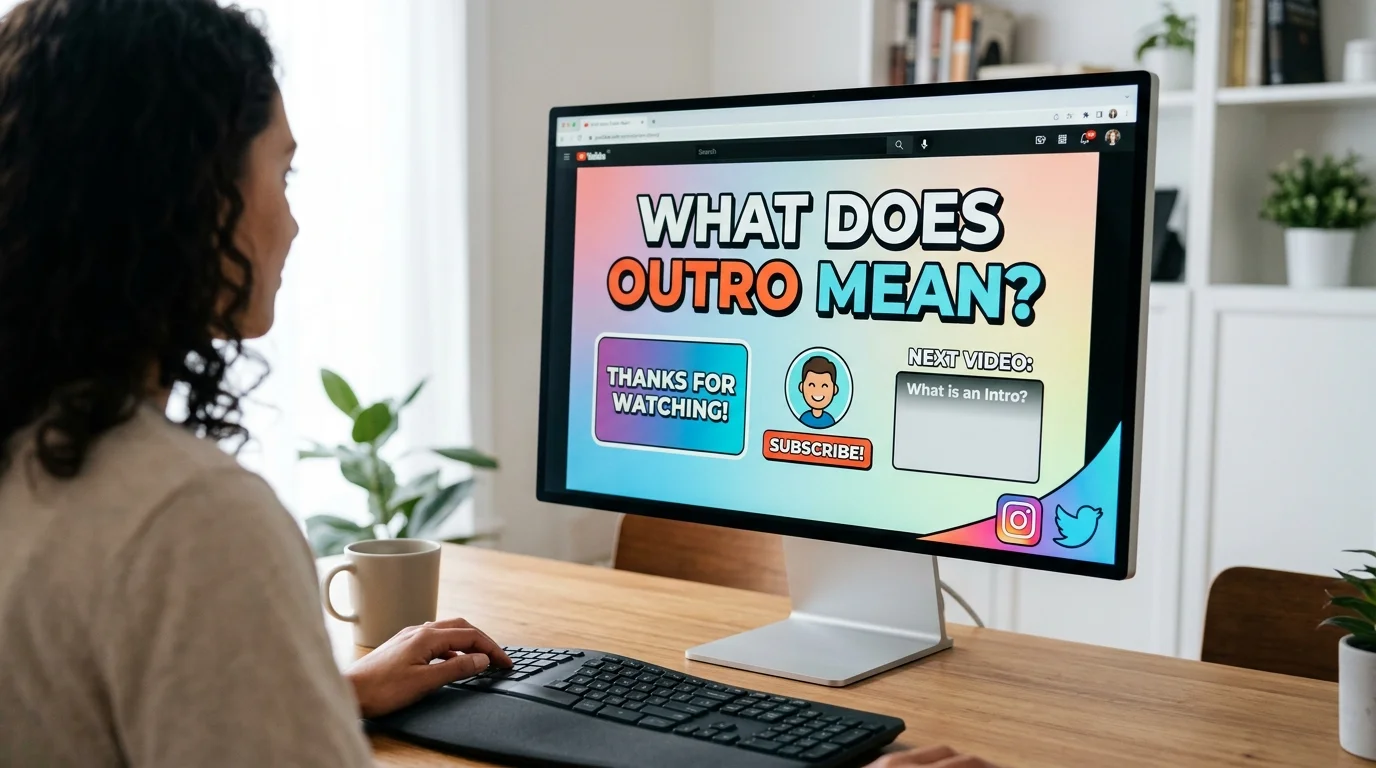
If you’ve watched YouTube videos, listened to podcasts, or seen online content, you’ve probably noticed creators saying “don’t forget to watch the outro” or “check out the outro music.” Many people search for outro meaning because the word is common but can be confusing for beginners.
An outro is essentially the ending segment of a video, song, or media piece, designed to wrap things up, give final messages, or encourage viewers to take action. Understanding the outro meaning helps you comprehend video content, podcast structure, and even casual chat references in 2026.
This guide explains the outro meaning, different types, real-life examples, and modern usage in social media, texting, and media production.

Outro Meaning in Music
In music, an outro is the concluding section of a song, composition, or musical performance. It serves as the musical ending that brings a piece to a satisfying close. An outro may gradually fade out, repeat a melody, introduce a final instrumental passage, or provide a strong finishing note that signals the end of the track.
The purpose of an outro is to create a smooth transition from the main body of the song to silence. Just as an introduction (intro) welcomes listeners into a song, an outro helps bring the listening experience to a natural conclusion.
Common types of outros in music include:
- Instrumental endings
- Fade-outs
- Repeated choruses
- Final vocal lines
- Dramatic closing sections
Many people search for the meaning of outro in music because it is a common term used in songwriting, music production, and audio engineering.
Outro Meaning in Urdu
The word outro in Urdu can be translated as:
اختتامی حصہ (Ikhtitami Hissa) – Closing section
آخری حصہ (Aakhri Hissa) – Final part
اختتامیہ (Ikhtitamiya) – Conclusion or ending
In music, videos, podcasts, and presentations, outro refers to the section that appears at the end and signals completion. For example, the final music, closing remarks, or ending credits of a video can all be considered an outro.
Outro Meaning in English
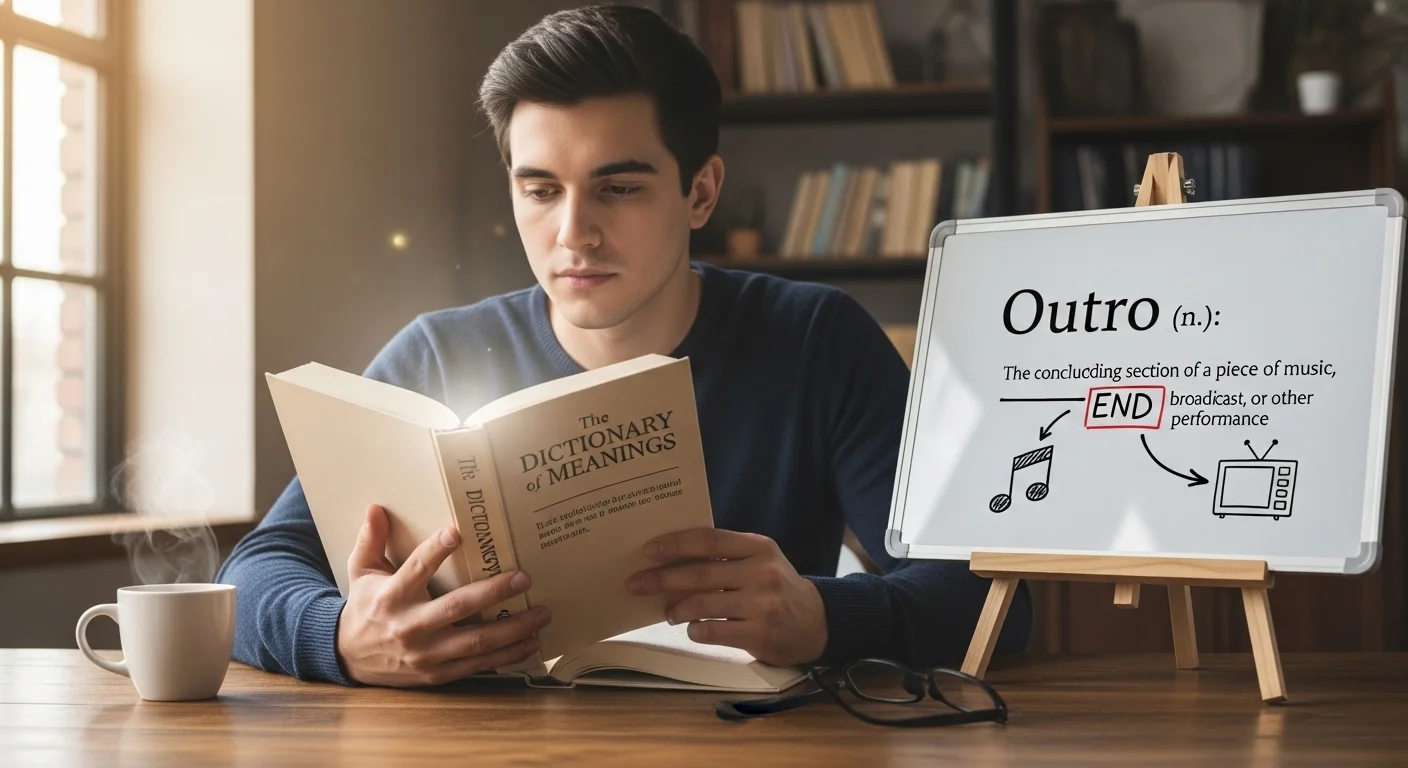
In English, outro means the concluding or ending section of a piece of content, such as a song, video, podcast, presentation, or broadcast.
The term is derived from the word “introduction” and was created as the opposite of “intro.” While an intro introduces the audience to the content, an outro provides closure and wraps everything up.
Example sentences:
- “The song has a beautiful guitar outro.”
- “Don’t skip the video outro because it contains important information.”
- The podcast outro includes social media links and credits.
Outro Meaning in Portuguese
In Portuguese, outro can be translated depending on the context as:
- Encerramento – Closing
- Finalização – Ending
- Parte final – Final section
- Conclusão – Conclusion
In music and media, outro refers to the ending segment of a song, video, podcast, or presentation. Portuguese speakers commonly use the English term “outro” in creative industries, especially in music production and digital content creation.
Example:
- “O outro da música é muito emocionante.”
- “A parte final do vídeo funciona como um outro.”
Intro and Outro Meaning
Intro and outro are complementary terms used in music, videos, podcasts, presentations, and other forms of media.
Intro Meaning
An intro is the opening section that introduces the audience to the content. It sets the tone, captures attention, and prepares listeners or viewers for what follows.
Outro Meaning
An outro is the closing section that concludes the content. It summarizes, wraps up, or provides a final impression before ending.
Key Difference
| Intro | Outro |
|---|---|
| Appears at the beginning | Appears at the end |
| Introduces the content | Concludes the content |
| Grabs attention | Provides closure |
| Sets the tone | Leaves a final impression |
Together, intros and outros help create a complete and professional experience for audiences.
Outroduction Meaning
Outroduction is a less commonly used term that refers to a concluding statement, closing remarks, or ending section of a presentation, speech, article, or performance.
The word combines:
- “Out” (ending)
- “Introduction” (opening)
Just as an introduction starts a discussion, an outroduction formally ends it. Although “outro” is more commonly used today, outroduction remains a valid term, particularly in writing, public speaking, and educational contexts.
Example:
- “The speaker’s outroduction summarized the key points of the presentation.”
- “The essay included a strong outroduction that reinforced the main argument.”
Outro Meaning in Spanish
In Spanish, outro can be translated as:
- Conclusión – Conclusion
- Parte final – Final section
- Cierre – Closing
- Final – Ending
In music and media production, Spanish-speaking creators often use the English word “outro” directly because it has become a widely recognized industry term.
Example:
- “El outro de la canción es muy memorable.”
- “El cierre del video incluye créditos y agradecimientos.”
The term generally refers to the ending portion of a song, video, podcast, or presentation.
Outro Meaning in Video
In video production, an outro is the final segment that appears at the end of a video. It helps conclude the content and often includes elements such as:
- Closing remarks
- End screens
- Credits
- Social media links
- Calls to action
- Background music
- Subscribe reminders
YouTube creators, filmmakers, and content marketers frequently use outros to encourage viewers to watch more content, subscribe to channels, or visit websites.
A well-designed video outro can improve audience engagement and provide a professional ending to the viewing experience. It serves the same purpose as an ending chapter in a book—bringing the content to a clear and satisfying conclusion.

What Does “Outro Meaning” Mean in Chat or Text?
Clear Definition
Outro refers to the concluding section or ending of a piece of content, such as a song, video, podcast, or written work. It is the counterpart to an intro and is designed to wrap things up, provide closure, or leave a final impression. Outros can be musical, visual, spoken, or written depending on the medium.
Different Meanings Based on Context
- Music / Song Context:
The outro is the closing part of a song, often instrumental or with repeated lyrics.
Example: “The guitar outro in that track is so catchy.” - Video / Podcast Context:
Refers to the ending section where the creator may summarize, sign off, or include credits.
Example: “Don’t forget to watch the outro for bonus content.” - Written Content / Articles Context:
Outro can mean the final paragraph or closing statement that concludes the topic.
Example: “The article’s outro nicely summarized all the main points.” - Casual / Slang Usage:
Sometimes used humorously to indicate leaving or finishing something.
Example: “Alright, time for my outro — see you later!”
Brief History
The term outro is a modern formation from the word “intro,” which itself is short for introduction. It first appeared in the late 20th century, primarily in music and media discussions. In 2026, “outro” is commonly used in YouTube videos, podcasts, music production, TikTok content, and social media captions to describe the ending or sign-off segment.
How People Use “Outro Meaning” in Real Conversations
Platforms:
- Texting / WhatsApp / Messenger:
Friend: “Did you see the outro of that video?”
Used when talking about the ending segment of content. - Instagram / TikTok:
Caption: “Loving the outro vibes on this track.”
Used to highlight music or video endings. - YouTube / Streaming Content:
“Make sure to watch the outro for the final message.”
Used to encourage viewers to see the conclusion or credits. - Podcasts / Audio Content:
“The outro really tied the episode together.”
Used to describe the closing section or summary. - Casual / Social Usage:
“Time for my outro — heading out now!”
Used jokingly or casually to indicate leaving.
When It’s Appropriate vs Awkward
- Appropriate:
- Discussing music, videos, or podcasts
- Referring to article or written conclusions
- Signaling closure or wrap-up in casual chats
- Awkward:
- Using “outro” in formal professional documents
- Overusing it in contexts unrelated to endings
- Confusing it with “intro” or beginning
Casual Explanation with Personal-Style Insights
Think of an outro as the grand finale of any content. It’s where creators leave their last impression, tie everything together, or add a memorable closing.
In casual conversation, saying “time for my outro” can be a playful way to indicate leaving a group chat, ending a call, or wrapping up any activity. In media, it’s an essential part of making endings feel polished and intentional.
Real-Life Examples of “Outro Meaning” in Text Messages
Example 1:
“Don’t skip the outro; there’s a secret scene.”
Explanation: Refers to the final clip in a video with extra content.
Example 2:
“The outro music of that song is amazing.”
Explanation: Refers to the last part of the song.
Example 3:
“She added a funny clip in the video outro.”
Explanation: Final segment of a video containing humorous content.
Example 4:
“I love how the outro wraps up the podcast episode.”
Explanation: Closing segment of the podcast.
Example 5:
“Thanks for watching, check out my outro!”
Explanation: Creator is directing viewers to the final segment of content.
Common Mistakes & Misunderstandings
Confusing Outro with Intro
Intro = beginning of content.
Outro = ending of content.
Thinking Outro Only Means Music
It can include visuals, speech, or interactive elements, not just music.
Overusing the Term in Chat
Using “outro” for normal conversations without context can confuse others.
Ignoring Its Importance
Outros can influence viewer engagement, subscriptions, and overall impact.
Related Words & Similar Terms
Intro – The beginning segment of content
Credits – List of contributors, often part of the outro
End screen – Interactive outro feature on videos
Closing remarks – Podcast or speech ending
B-roll / Final scene – Visual outro components
These terms can be used for internal linking on a media-focused website.
FAQs
What does outro mean in simple words?
It means the ending segment of a video, song, or media content.
Is outro only used in videos?
No, it can refer to songs, podcasts, and other media forms.
Can an outro include music or speech?
Yes, it can include music, visuals, or spoken messages.
Is outro important for engagement?
Yes, especially in YouTube or TikTok videos, to encourage actions like likes, shares, or subscriptions.
Is outro still widely used in 2026?
Yes, it’s standard in video, music, and podcast content.
Conclusion
The outro meaning is simple but essential in media. It’s the final segment that wraps up a video, song, or podcast, delivers key messages, and sometimes adds entertainment or engagement.
Understanding outro meaning helps you appreciate media better, follow content structure, and even create your own professional content without confusion.
