
Shangri-La Meaning Japanese
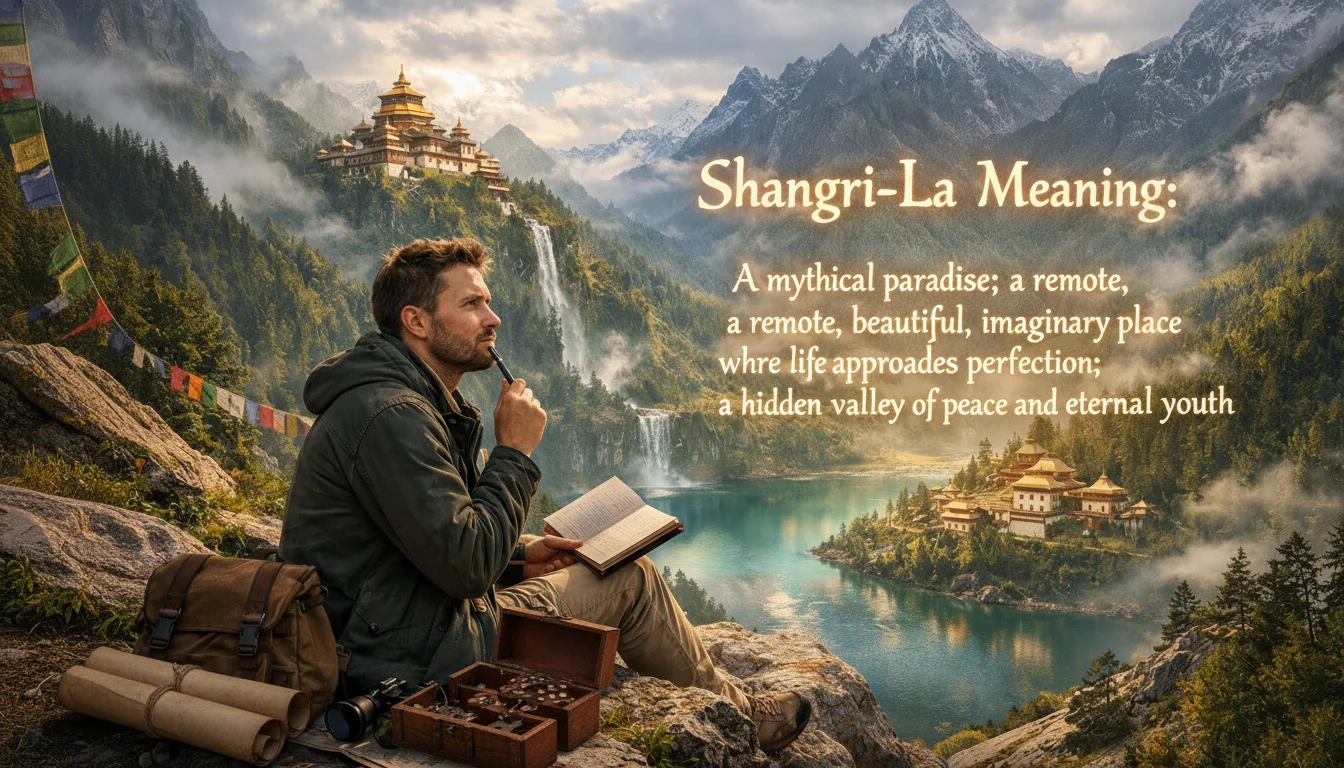
In Japanese, Shangri-La (シャングリラ) is generally used to refer to an imaginary paradise, utopia, or ideal place of peace and happiness.
The word is borrowed from English rather than being a native Japanese term. In Japanese culture, Shangri-La often symbolizes:
A perfect world
A hidden paradise
Spiritual peace
An ideal destination
A place free from troubles
The term appears in Japanese literature, anime, music, and popular culture as a symbol of a dreamlike or perfect place.
Shangri-La Meaning in Tibetan
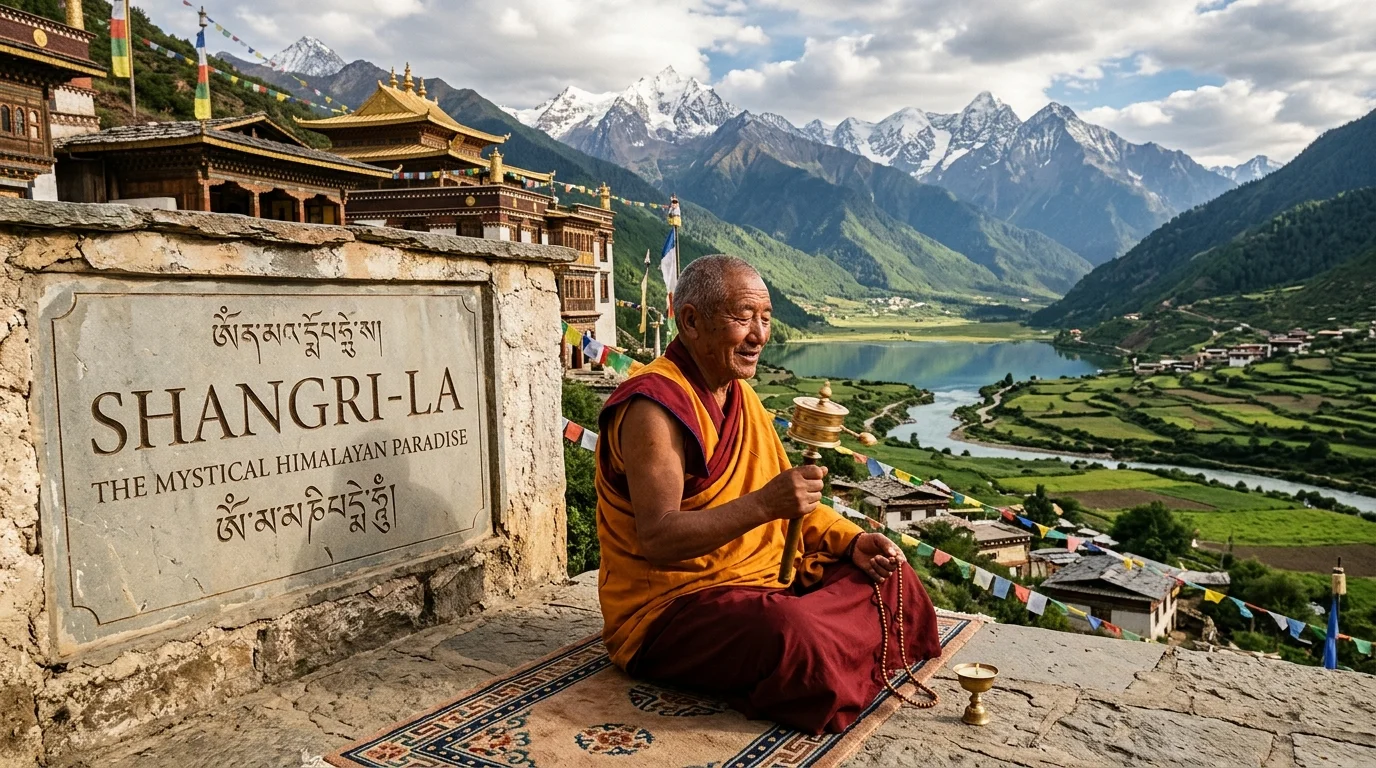
Many people believe Shangri-La has Tibetan origins because it is associated with the Himalayan region and Tibetan culture.
However, Shangri-La is not a traditional Tibetan word found in classical Tibetan dictionaries.
The name became famous through the novel Lost Horizon by James Hilton, which described a hidden valley in the Himalayas where people lived in peace and harmony.
Because of its Himalayan setting, Shangri-La became strongly linked with Tibetan spirituality, monasteries, and the idea of a secluded paradise.
Today, it is often used to describe an earthly heaven or utopian retreat.
Shangri-La Meaning in Hindi
In Hindi, Shangri-La is often interpreted as:
स्वर्ग समान स्थान (A heaven-like place)
आदर्श लोक (Ideal world)
शांतिपूर्ण स्वर्ग (Peaceful paradise)
काल्पनिक स्वर्ग (Imaginary paradise)
The term is used metaphorically to describe a place of beauty, happiness, and tranquility.
Example
“This mountain village feels like Shangri-La.”
This means the village feels exceptionally peaceful and beautiful.
Shangri-La Meaning in English
In English, Shangri-La refers to:
“A fictional paradise or an idyllic place of beauty, peace, and happiness.”
The word is often used figuratively to describe:
A dream destination
A perfect community
A peaceful retreat
A utopian society
Example
“The island was a Shangri-La for travelers seeking relaxation.”
In modern English, Shangri-La has become synonymous with paradise.
Shangri-La Meaning ELO
For fans of the band Electric Light Orchestra (ELO), Shangri-La is the title of a song from the album A New World Record.
In the song, Shangri-La symbolizes:
A lost dream
Emotional longing
An idealized place or relationship
The search for happiness
The song uses the concept of Shangri-La metaphorically rather than referring to a literal location.
Shangri-La Meaning in Chinese
In Chinese, Shangri-La is commonly written as:
香格里拉 (Xiāng Gélǐlā)
The term is widely used to describe a paradise-like place characterized by:
Natural beauty
Harmony
Peacefulness
Spiritual richness
Interestingly, a county-level city in China’s Yunnan Province was officially renamed Shangri-La to strengthen its connection to the legendary paradise described in Lost Horizon.
Today, the Chinese name is associated with tourism, Tibetan culture, and scenic mountain landscapes.
Shangri-La Meaning: What Language?
Many people ask what language the word Shangri-La comes from.
The truth is that Shangri-La was popularized by English novelist James Hilton in Lost Horizon.
Although the name sounds similar to Tibetan words and is associated with Tibetan culture, scholars generally consider it a fictional place name created for the novel.
Therefore:
It is not originally English.
It is not a traditional Tibetan word.
It is a fictional name inspired by the Himalayan region.
Over time, it entered English and many other languages as a symbol of paradise.
Shangri-La Language
There is no officially recognized language called Shangri-La language.
When people refer to the “Shangri-La language,” they may mean:
The fictional culture described in Lost Horizon
Languages spoken in regions associated with Shangri-La
Tibetan dialects spoken in areas connected to the legend
In modern usage, the term Shangri-La refers to a mythical location rather than a distinct language.
The concept remains more cultural and symbolic than linguistic.
Conclusion
Shangri-La is a famous term that represents a hidden paradise, utopia, or ideal place of peace and happiness. Popularized by James Hilton’s novel Lost Horizon, it has become a global symbol of beauty, harmony, and spiritual fulfillment. Whether discussed in English, Chinese, Hindi, Japanese culture, or music by ELO, Shangri-La continues to evoke images of a perfect world where people live in tranquility and contentment.

What Does “Shangri La Meaning” Mean in Chat or Text?
Clear Definition
Shangri La refers to a fictional, utopian place of peace and perfection.
Key points:
Symbolizes paradise, harmony, and escape from stress
Represents an idealized or perfect place or situation
Often used metaphorically in modern conversation
In chats, “Shangri La” can describe a mental state, a vacation, a relationship, or even a calm, idyllic moment.
Different Meanings Based on Context
Literal / Fictional Meaning: Originally a hidden paradise described in James Hilton’s 1933 novel Lost Horizon.
Metaphorical / Chat Use: Refers to a perfect scenario, peaceful space, or dream lifestyle.
Social Media / Pop Culture: Used in captions or memes to highlight calm, luxury, or ideal experiences.
Example:
“Finally got my weekend alone — total Shangri La vibes.”
Historical & Cultural Background
Coined by James Hilton in 1933, in Lost Horizon
Described as a hidden valley in the Himalayas where people live in peace and longevity
Over time, it became a symbol for utopia, serenity, and escape in literature, movies, and conversation
In chat culture, it’s used casually to indicate relaxation, luxury, or ideal experience
How People Use “Shangri La Meaning” in Real Conversations
Platforms
Texting: “This cabin is pure Shangri La.”
Instagram/TikTok: Captions about vacations, aesthetic setups, or cozy home vibes
Discord/Forums: Describing dream scenarios or luxury locations
Dating Apps: Playful reference to an ideal date or serene place
When It’s Appropriate vs. Awkward
Appropriate:
Highlighting calm, beauty, or ideal situations
Vacation posts or serene experiences
Chatting about dream locations or moments
Awkward:
Using it to exaggerate trivial experiences
Misapplying in professional or serious discussions without context
Casual Explanations with Personal-Style Insights
In modern texting, Shangri La is often shorthand for paradise or perfection. People might say:
“This café is my Shangri La — peaceful and perfect.”
“Weekends with no responsibilities = total Shangri La.”
It’s versatile because it conveys serenity, happiness, and an ideal vibe in a short phrase.
Real-Life Examples of “Shangri La Meaning” in Text Messages
Example 1:
Text:
Mia: “Check out this beach view!”
Leo: “Wow… total Shangri La.”
Explanation:
Metaphorical. Refers to paradise-like beauty.
Example 2:
Instagram caption:
“Morning coffee in my cozy nook = Shangri La mornings.”
Explanation:
Describes peace and comfort in daily life.
Example 3:
Discord chat:
Alex: “Finally finished the project — my weekend is Shangri La.”
Jamie: “Enjoy the calm!”
Explanation:
Metaphorical for relaxation and stress-free time.
Example 4:
Text:
Friend: “This spa is amazing.”
You: “I feel like we’re in Shangri La.”
Explanation:
Literal inspiration from fictional paradise, applied to real life.
Example 5:
Snapchat story:
“Shangri La vibes in this cabin retreat.”
Explanation:
Casual, playful description of an idyllic location.
Common Mistakes & Misunderstandings
Thinking Shangri La is a real place
It’s fictional, although inspired by Himalayan landscapes.
Overusing the term casually
Using it for minor comforts can make it feel exaggerated.
Confusing with luxury brands or hotels
Some may mistake references to hotels named Shangri La as literal meaning.
Ignoring metaphorical use
Missing the figurative sense of peace, paradise, or perfection in conversations.
Misreading tone in chat
Context is key — it can be playful, serious, or descriptive depending on the message.
Related Slangs & Abbreviations
Similar Chat Terms
Utopia: Perfect world or situation
Paradise: Relaxation or ideal place
Heaven: Blissful, stress-free scenario
Zen: Calm, peaceful vibes
Escape: Retreat or break from stress
Short Explanations
These terms are often used in the same way as Shangri La in chats — to convey serenity, perfection, or dream-like experiences.
Suggest Internal Linking Opportunities
Articles about fictional places and their influence on modern chat slang
Guides on using metaphorical language in texting
Posts about vacations, relaxation, and lifestyle captions for social media