

What Does “Static Meaning” Mean in chat or Text?
Clear Definition
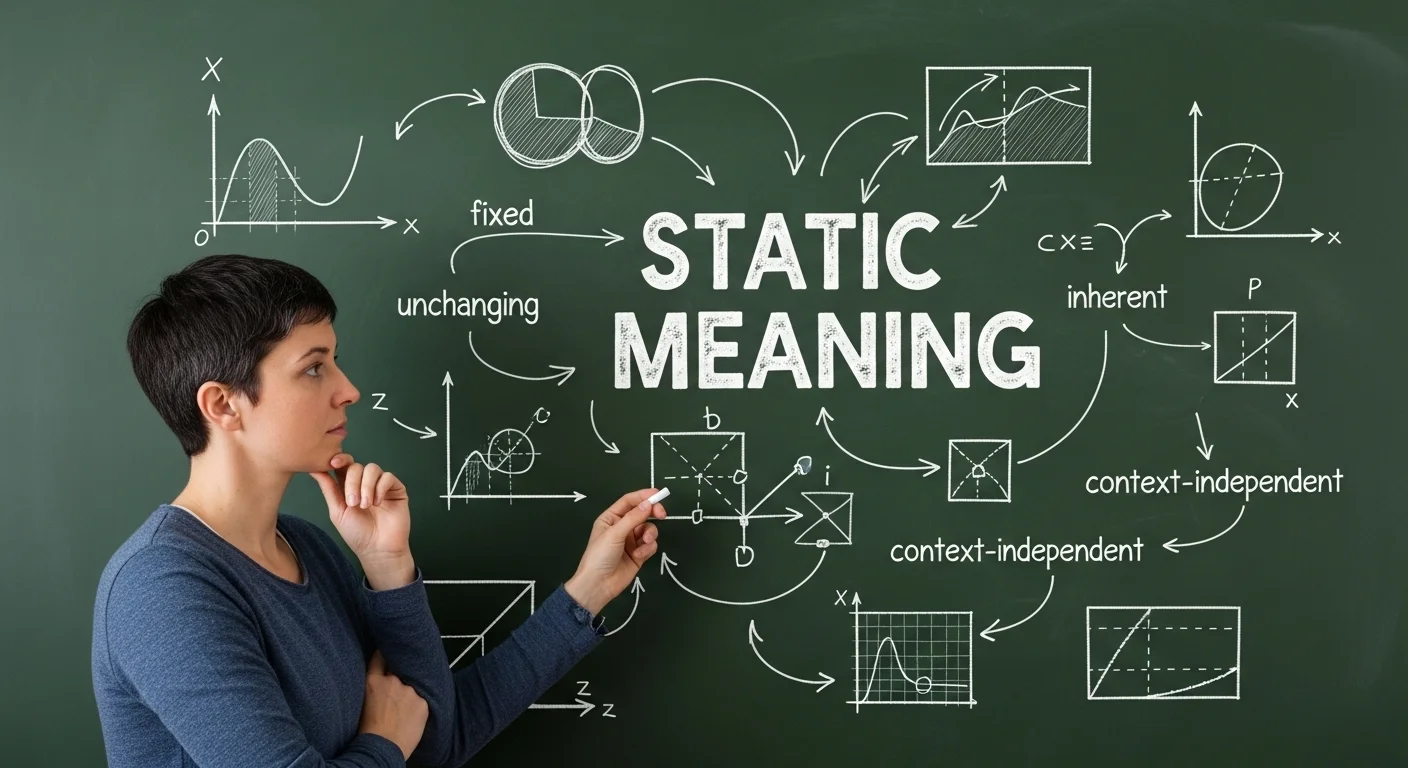
Static generally refers to something that is fixed, unmoving, or unchanged. It can describe:
- A situation that does not change
- Physical objects that are not moving
- Electrical charge that stays in one place (static electricity)
- Noise interference in sound systems
Different Meanings Based on Context
- Everyday Language:
Something that remains the same or does not change over time. - Science / Physics:
Static electricity refers to electric charge that builds up and stays on a surface until released. - Technology / Web Development:
A static website or page has fixed content that does not update automatically. - Sound / Media:
Static can refer to crackling or buzzing noise caused by signal interference.
Brief Background
The word “static” comes from the Greek word meaning “causing to stand.” Over time, it became commonly used in science, technology, and everyday speech to describe anything that remains still or unchanged.
How People Use “Static Meaning” in Real Conversations
Platforms
- Texting / WhatsApp / Messenger:
Friend: “My salary has stayed static this year.”
Used to describe something that hasn’t changed. - Social Media / Instagram / TikTok:
Caption: “My growth has been static lately.”
Refers to no increase or improvement. - Gaming / Tech Chats:
“This is a static page, not dynamic.”
Used in programming or design discussions. - Phone / Audio Conversations:
“There’s too much static on the call.”
Refers to background noise interference. - School / Science Class:
“We learned about static electricity today.”
Used in educational contexts. - When It’s Appropriate vs Awkward
When It’s Appropriate vs Awkward
Appropriate:
- Academic discussions
- Technology or programming conversations
- Describing unchanged situations
- Talking about sound interference
Awkward:
- Using it instead of “boring”
- Saying “I feel static” without context
- Using it in emotional discussions where clearer words exist
Casual Explanation with Personal-Style Insights
Think of static as something that is stuck in place. It isn’t growing, moving, or changing.
If your followers are static, they’re not increasing.
If a website is static, it doesn’t update automatically.
If there’s static on a radio, it means there’s noise blocking the signal.
The meaning depends on context, but the idea of “no movement or no change” stays the same.
Real-Life Examples of “Static Meaning” in Text Messages
Example 1:
“My income has remained static for two years.”
Explanation: It hasn’t increased or decreased.
Example 2:
“My follower count is static.”
Explanation: The number is not changing.
Example 3:
“This is just a static HTML page.”
Explanation: The page content doesn’t change dynamically.
Example 4:
“I can’t hear you because of static.”
Explanation: There is signal interference noise.
Example 5:
“I got a static shock from the door handle.”
Explanation: Built-up electrical charge caused a small shock.
Common Mistakes & Misunderstandings
Confusing Static With Slow
Static means no movement, not slow movement.
Thinking Static Only Refers to Electricity
Static can refer to sound, websites, growth, or situations — not just electricity.
Mixing Static With Stable
Stable means steady and secure.
Static means unchanged and fixed.
Using Static as an Emotion
Saying “I feel static” may confuse people because it’s not commonly used emotionally.
Confusing Static With Dynamic
Static = Fixed
Dynamic = Changing or active
Assuming Static Is Always Negative
Static can be neutral. For example, stable prices can be positive.
Related Terms & Abbreviations
Similar Terms
Dynamic: Constantly changing
Stable: Steady and secure
Fixed: Permanently set
Stationary: Not moving physically
Static Electricity: Built-up electric charge
Short Explanations
These related words help you better understand the differences between movement, change, and stability in different contexts.
Internal Linking Opportunities
- Articles explaining static vs dynamic
- Guides about static electricity for students
- Tech blogs on static and dynamic websites
- Educational content about sound interference